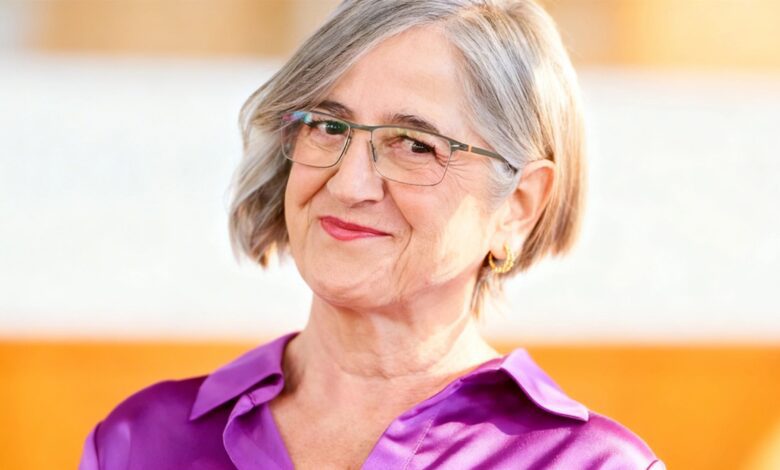
In Spanish families with strong traditions, it is often expected that children will continue their parents’ legacy, especially among renowned families. However, the story of Eva Arguiñano—one of the most recognizable figures in Spanish gastronomy—shows that even in prominent dynasties, unexpected turns are possible. She recently spoke openly for the first time about her two children, who have chosen a completely different path, far from the kitchen and television cameras.
As Divinity reports, Eva Arguiñano, born in Beasain in 1960, grew up in a large family where cooking was not just a profession but part of their family identity. Her brother, Karlos Arguiñano, has long been a symbol of Spanish cuisine, and many of his children continue the family tradition. Against this backdrop, Eva’s children’s decision not to follow in her footsteps stands out as particularly notable.
Family distance
Despite her public profile, Eva has always tried to shield her personal life from media attention. Little is known about her marriage, and her children’s names have not been disclosed even in rare interviews. According to Divinity, after the divorce her children became her main support, while remaining out of the media spotlight. Even on social media, Eva does not post family photos or share details about her loved ones.
Recently, on the ‘La revuelta’ program, she made an exception and spoke for the first time about her children. Both are already adults, fully independent, and have chosen careers unrelated to gastronomy. One of her sons works as a primary school teacher, educating children up to the age of ten, while the other teaches health-related subjects in vocational institutions. This career choice surprised many fans, as the Arguiñano family has always placed culinary arts at the center of their lives.
A new role in the family
Particular attention was drawn to Eva’s admission that she recently became a grandmother. One of her sons gave her a grandson who is not yet two years old. According to Eva, the little one has not yet tried his grandmother’s famous desserts, but she jokes that she’ll have plenty of time to delight him with her culinary masterpieces. Interestingly, at home, Eva prefers to cook simple dishes rather than bake, despite her fame as a dessert specialist.
The Arguiñano family’s history shows that even in the most famous dynasties, children may choose a path outside the family business. This is also true for other well-known Spanish families, where new generations are exploring diverse fields. Analysis by russpain.com indicates that such examples are becoming increasingly common in modern Spain, where personal choice and professional freedom are valued above tradition.
Dynasty and private life
Unlike her nephews, who are actively involved in the family business and appear on television, Eva Arguiñano’s children have chosen to stay out of the limelight. Their decision to avoid public life and not pursue careers in gastronomy highlights the diversity of paths even within the same family. As reported by Divinity, Eva proudly speaks of her children’s professional achievements, without insisting that they continue the family tradition.
In Spanish society, the topic of family values and generational continuity is often a subject of discussion. The Arguiñano family demonstrates that respecting individual choices and supporting loved ones is more important than following predetermined scripts. In this context, other well-known families come to mind—for example, how relationships between artists and their relatives have changed after participating in popular shows, as described in a feature about the changes in the family of Omar Montes and Isabel Pantoja (details on artists’ family transformations).
Eva Arguiñano is part of a renowned Basque family celebrated for their contributions to Spanish cuisine. Her career in television and the restaurant industry has made her a household name nationwide. Despite her professional success, she has always emphasized the importance of personal life and has sought to shield her loved ones from excessive attention. Her story is an example of how public life can be balanced with respect for privacy and support for the independent choices of children.