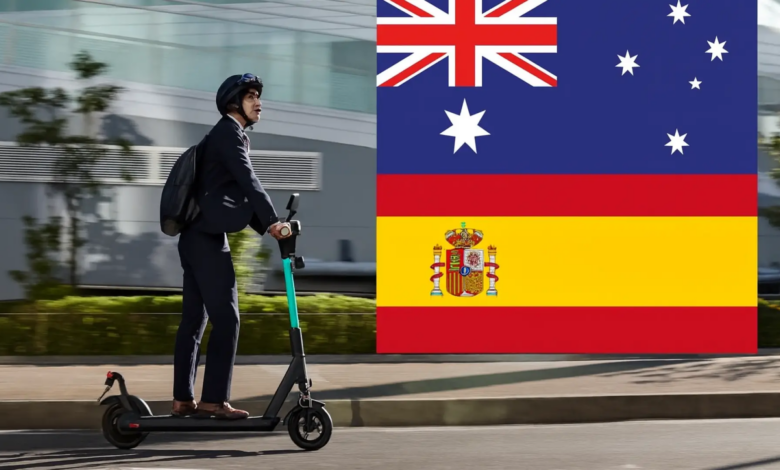
When electric scooters and bicycles first appeared on city streets, they were welcomed as symbols of an eco-friendly future and freedom of movement. But within a few years, the landscape changed dramatically: today, these devices have become a source of concern for both authorities and residents. Australia was the first to take decisive action, declaring war on dangerous personal mobility devices.
In a country known for its uncompromising approach to safety, a large-scale campaign has begun to seize and destroy electric scooters and bicycles that fail to meet established standards. The reason isn’t bureaucratic whim, but a genuine threat: fires caused by substandard lithium batteries have become so frequent that the problem can no longer be ignored.
Danger in the Details
Explosions and fires caused by defective batteries have become a real headache for firefighters and police. The phenomenon known as ‘thermal runaway’—where a damaged or faulty battery cell overheats and triggers a chain reaction—turns ordinary home charging into a potential disaster. Fire spreads instantly, and putting it out with conventional methods is nearly impossible.
Incidents happen especially often with devices purchased on little-known online platforms or brought from abroad. Thousands of devices that have not undergone any serious inspection have ended up in homes and stores. Many have been modified in a makeshift way: owners swapped out batteries for more speed or range without considering the consequences.
Authorities’ response
Australian officials decided not to wait for another tragedy. Raids began at warehouses and stores throughout the country, along with customs inspections. Anything that doesn’t meet safety standards is destroyed. This approach sparked heated debate in Europe, where the problem of substandard electric scooters and bikes is just as acute.
In Spain, the market for such devices has multiplied in recent years. Despite stricter regulations and mandatory certification, a stream of questionable equipment still flows in. Purchases made online or secondhand are especially risky—no one can guarantee the battery won’t explode right in your living room.
Spanish context
The country is already discussing tougher oversight and even destruction of dangerous devices, following the Australian scenario. For now, officials limit themselves to warnings and public awareness campaigns, but the growing number of incidents may force them to act more decisively. After all, it’s not just about road safety, but about people’s lives in their own homes.
The problem is compounded by the fact that many users are unaware of the dangers posed by cheap chargers and batteries bought online. One bad purchase—and your apartment could turn into a blazing inferno. Authorities are already stepping up inspections at customs and in logistics centers to stop dangerous devices from entering the market.
Future in question
Will Spain become the next Australia in the fight against low-quality e-scooters and bicycles? There is no clear answer yet. But if the number of fires and explosions keeps rising, officials will have no choice. Priorities are shifting: preventing tragedy is now more important than ensuring convenient mobility.
The question isn’t whether Spain will introduce such tough measures, but when it will happen. Every new incident brings closer the moment when mass elimination of dangerous devices becomes unavoidable. Behind the facade of trendy urban mobility lies a real threat that can no longer be ignored.
Australia is known for its uncompromising approach to safety and quality control. In recent years, the country has become one of the world leaders in implementing strict standards for electric transport. It was here that e-scooters and bicycles failing inspections were first destroyed on a large scale to protect people from fires and explosions. This move sparked broad discussion and set an example for other countries where the problem of poor-quality batteries is only gaining momentum.