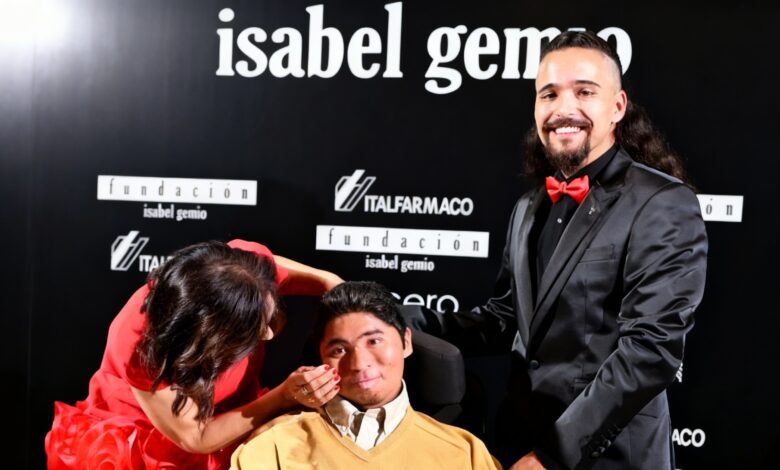
In Spain, there is growing discussion about how personal stories of public figures can become catalysts for change in healthcare. A recent charity evening marking the 18th anniversary of Fundación Isabel Gemio once again underscored the importance of supporting research into rare diseases. The appearance of Isabel Gemio with her sons Gustavo and Diego Manrique on the red carpet became not only a symbol of family unity, but also drew national attention to the challenges faced by thousands of families across the country.
As Divinity notes, the foundation was created after Gustavo was diagnosed with Duchenne muscular dystrophy at an early age. Since then, the organization has been raising funds for scientific projects related to neuromuscular and other rare diseases. The event itself attracted many high-profile guests, including Lidia Torrent, Antonia Dell’Atte, Loles León, Sandra Barneda, Joaquín Torres, Mario Sandoval, Ainhoa Arteta, Pepe Navarro, Pepa Muñoz, Nuria González, and Pedro Trapote. However, it was Gemio’s appearance with her sons that resonated most strongly with guests and the media.
Family support
Isabel Gemio has often stressed that managing the foundation requires constant oversight and effort. The board currently consists of three people, and for the TV presenter, the participation of her sons in every major foundation event is especially important. On this occasion, she chose a short red dress with a floral print by Tot Hom, while Gustavo and Diego, now 20 and 28, accompanied their mother throughout the evening. According to Divinity, both sons are from her marriage to Nilo Manrique.
In Spain, the issue of rare diseases remains one of the most challenging for families facing such diagnoses. Gemio emphasizes that, despite her personal resources, she is able to care for her son with the help of two caregivers and a physiotherapist, but most mothers are forced to completely change their lives to provide constant care for their children. She notes that Duchenne disease is one of the most severe forms of muscular dystrophy, depriving children of the ability to move, play, and even hug their loved ones.
Trials and hope
From the moment of diagnosis, the family’s life changed forever. According to Gemio, the disease progresses rapidly: by the age of 12, Gustavo was already confined to a wheelchair. She compares Duchenne dystrophy to ELA, but notes that in children, the disease takes away not only physical abilities but also the joy of childhood. Nevertheless, the TV presenter continues to believe in scientific progress, though she admits she is unsure whether scientists will find a solution in time for her son and other children with similar diagnoses.
In Spain, more and more families are openly discussing the difficulties associated with rare diseases. Recently, for example, Bea Gimeno shared her experience of motherhood after the birth of her son Pelayo, talking about the challenges of the first months and how the family copes with new challenges. You can read more about this in the article about the changes in Bea Gimeno’s life after the birth of her son.
Impact on society
Public initiatives like the Fundación Isabel Gemio dinner not only help raise funds but also shape a new public attitude towards rare diseases. The presence of well-known figures at the event draws attention to an issue that has long remained in the background. According to russpain.com, such occasions are becoming a vital tool for advancing scientific research and supporting families facing challenging circumstances.
According to Divinity, Gemio believes her professional experience and public profile allow her to speak openly about these issues to show that rare diseases can affect any family. She stresses that every contribution matters, but the path toward real change is still far from over.
Isabel Gemio is one of Spain’s most prominent television presenters, who has dedicated a significant part of her career to social support and charity work. Her foundation funds research on neuromuscular and rare diseases, as well as supports families facing such diagnoses. Thanks to her personal experience and public involvement, Gemio has succeeded in bringing national attention to this issue—a key step for advancing scientific projects and changing society’s view of rare diseases.