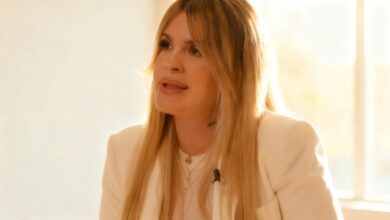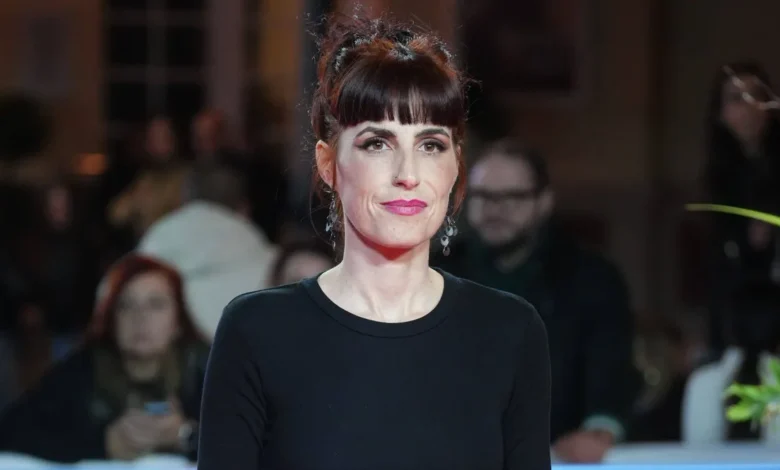
In Spanish cinema, few stories delve as deeply into the themes of identity and overcoming adversity as the journey of Miriam Garlo. Her name became widely known after the release of the film “Sorda,” in which she played the lead role. Yet behind this success lies a personal drama that began in childhood and shaped not only her career but also her inner world.
In her early years, Miriam was no different from other children: she grew up in a family where her older sister was a role model, and she often spent her free time watching movies. However, her ordinary life was abruptly interrupted. At the age of seven, the girl suffered a severe reaction to a common medication—acetylsalicylic acid. The consequences were irreversible: Miriam lost 70% of her hearing. From that moment on, she had to learn to live in a world where sounds became a luxury and every word—a mystery.
Losing her hearing not only changed her perception of the world around her but also forced her to find new ways to communicate. Miriam quickly mastered lip reading so she wouldn’t fall out of her usual social circle. But inwardly, she struggled to accept her new reality for a long time. Her childhood memories remained purely visual—images, colors, movements, but no sounds. She hid her sadness and confusion even from those close to her, trying not to burden her family with unnecessary worries.
Turning Point
It was only after more than two decades, when Miriam turned thirty, that she took a step that changed her life. She began learning sign language, discovering a completely new way to express her thoughts and feelings. This experience became a true revelation for her: for the first time in many years, she felt part of a community where she didn’t have to pretend or hide her vulnerability.
Mastering sign language became more than just a new skill—it was a symbol of self-acceptance. Miriam acknowledges that this was when her life seemed to take on new colors. Where once she saw herself as someone deprived of an important part of the world, she now found confidence and inner harmony. This personal transformation became the starting point for her creative and personal growth.
The Birth of “Sorda”
Miriam’s personal experiences formed the basis of the film “Sorda.” The project was initially conceived as a short film in which the actress shared her fears and hopes about motherhood. Later, the story evolved into a feature-length film, where deafness is portrayed not as a tragedy, but as part of a complex, multifaceted personality.
In the film, Miriam portrays a woman who is neither idealized nor turned into a symbol. Her character is an ordinary person with her own weaknesses, mistakes, and doubts. This approach allowed viewers to see the lives of people with hearing impairments from a new perspective, recognizing them not just as objects of sympathy but as independent, strong individuals.
Societal Impact
“Sorda” became more than just a successful film—it turned into a true cultural phenomenon. The picture sparked widespread discussion, helped break down stereotypes, and brought greater understanding of the challenges faced by those living in silence. Thanks to the heartfelt performance of Miriam Garlo and an honest script, the film marked an important step toward inclusivity in Spanish society.
Miriam’s story is not just about overcoming personal difficulties, but also an example of how art can change attitudes toward different forms of human experience. Her journey inspires many not to be afraid of being themselves and to seek new ways of self-expression, even if it means completely rethinking their lives.
Miriam Garlo is a Spanish actress and artist whose life story has become a symbol of inner strength and self-acceptance. After losing her hearing in childhood, she not only built a successful career but also became a voice for those often left unnoticed. Her work in film and art helps society better understand the world of people with hearing impairments, while her personal story inspires change and the embrace of one’s own uniqueness.