Parents ask court for permission to challenge adult children’s euthanasia
Spain faces first case on whether families can intervene in adult euthanasia decisions
Spain’s Supreme Court to decide if families can appeal an adult’s euthanasia
A dispute is brewing in Spain that could reshape not just legal precedent, but also public attitudes toward life and death. The country’s Supreme Court is considering, for the first time, whether a father has the right to challenge the euthanasia request of his adult son, who has been certified fully competent. The outcome will determine how deeply families can intervene in such personal decisions, and where the line is drawn for individual autonomy.
The case centers on a 54-year-old man who, after three strokes and two heart attacks, became bedridden and unable to speak. Despite the positive assessment from the Catalonia Euthanasia Commission, the man’s father took the matter to court, arguing that the state is obliged to protect life, especially as his son is in a vulnerable position. A lower court in Barcelona rejected the claim, citing the applicant’s full legal competence and absence of mental disorders. Furthermore, the man himself had requested that his family not be informed of his decision.
The right to intervene
However, after an appeal and support from the prosecutor’s office, the High Court of Catalonia recognized the father’s ‘legitimate interest’ in challenging the euthanasia. Now, the Supreme Court of Spain must address the central question: can the law allow third parties to intervene in such personal decisions when there is no explicit provision for it? The court’s decision will set a precedent and define the limits of family involvement in euthanasia cases.
The situation recalls the recent case of 25-year-old Noelia Castillo, where her father also tried to use the courts to prevent his daughter from exercising her right to euthanasia, despite medical and legal approval. That legal battle lasted for months, and the issue of the family’s right to appeal was never resolved at the highest level. Now, that gap awaits closure.
Historical background
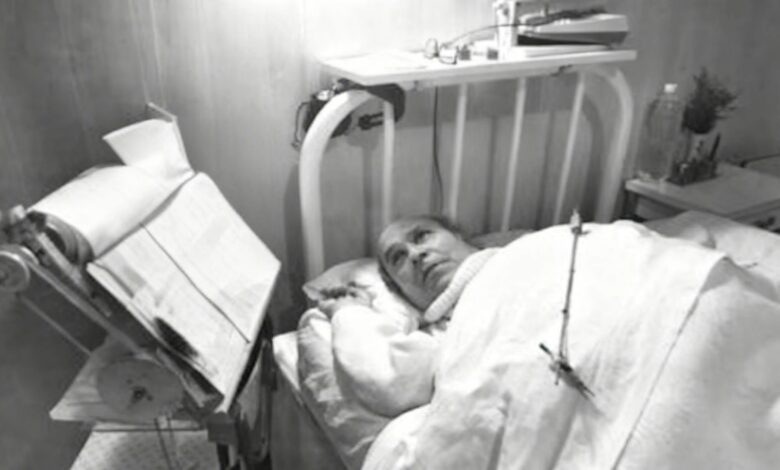
Recalling the history of the fight for the right to die with dignity, the case of Ramón Sampedro cannot go unmentioned. His name became a symbol of the movement to legalize euthanasia in Spain. After a tragic accident in 1968, Sampedro spent three decades advocating for the right to decide his own fate. His death in 1998, assisted by his close friend Ramona Maneiro, sparked intense debate and became a turning point in public opinion.
In this case, a key role was played by Ramón’s brother, José Sampedro. For many years he cared for his brother together with his wife, but strongly disagreed with the way Ramón ended his life. José argued that Maneiro’s involvement was driven by personal gain rather than care and that his brother deserved a different, more dignified death. After Ramón’s death, José repeatedly spoke to the media, accusing Maneiro and some doctors of pressuring his brother and providing insufficient care in the final years of his life.
Family conflicts
The Sampedro case shows just how difficult end-of-life decisions can be within families. According to José and his wife, after Ramón moved in with Maneiro, his condition worsened and the care he received was less thorough. They believed that it was the environment that influenced Ramón’s final decision. After Maneiro admitted to assisting with euthanasia, José insisted it was a crime, not an act of love.
According to RUSSPAIN, such conflicts are not uncommon: when life and death are at stake, even the closest people can find themselves on opposite sides of the barricade. The question of who has the right to make the final decision remains unresolved, which is why the current Supreme Court proceedings are drawing such wide attention.
Legal consequences
The decision of the Supreme Court of Spain will set a precedent for future cases related to euthanasia. If the court recognizes the family’s right to appeal, this could lead to lengthy legal disputes and added pressure on people facing difficult life situations. Conversely, denying such a right would strengthen the principle of personal autonomy and independence when it comes to life and death decisions.
Questions about family influence on the fate of an adult go far beyond medicine and law. They touch on the foundations of trust, respect for individual choice, and the limits of interference in private life. As russpain.com reports, similar disputes arise not only in Spain but in other European countries where societies are facing the need to rethink traditional values.
Family conflicts also play a role in major decisions in other areas. For example, leadership changes in large companies are often accompanied by disputes between relatives and shareholders, as was the case with the leadership change at Endesa and the increased control by Enel. While this is a business matter, the essence of the conflict—a fight for the right to make key decisions—is in many ways similar to the current situation around euthanasia.
Ramon Sampedro became one of the most prominent symbols in the fight for the right to die with dignity in Spain. His story inspired the film “Mar adentro,” which achieved international acclaim and won an Oscar. After his death, a nationwide debate unfolded, ultimately leading to the legalization of euthanasia in 2021. Sampedro’s name still sparks controversy: some see him as a hero, others as a victim of circumstance. His brother José, even after many years, continues to defend his point of view, believing that the decision to die should involve not only the individual but also take the family’s perspective into account. This dispute reflects deep divisions in Spanish society, where questions of life and death remain subjects of intense debate.