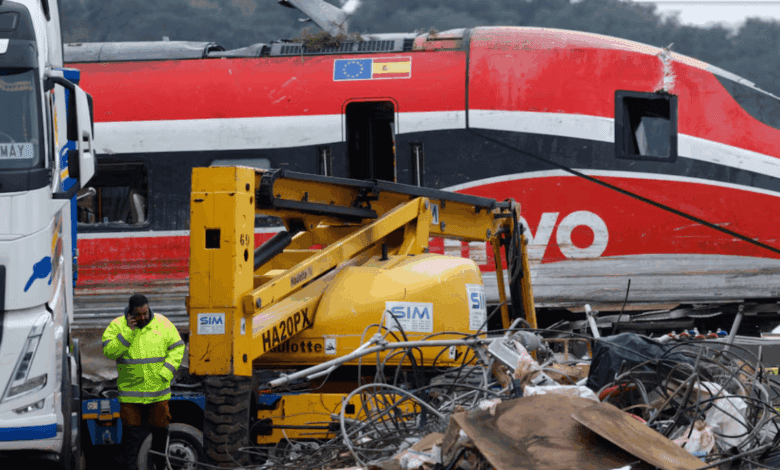
What began as an ordinary Sunday evening in Adamuz turned into a nightmare for hundreds of train passengers when a railway collision claimed the lives of 45 people. Yet it wasn’t only the accident itself that drew concern, but also the response of emergency services and the delay in revealing the true extent of the disaster.
Experts insist that in any critical situation, the speed of information transfer and the safety of rescuers are crucial. This time, however, the system failed. Renfe and Adif control centers knew the trains’ locations but were unaware that one train had literally broken apart, with carriages tumbling down the embankment. This had fatal consequences for many passengers, but in the initial minutes after the crash, none of those responsible realized just how serious things were.
Lost minutes
At 19:43, two trains—Alvia 2384, traveling from Madrid to Huelva, and Iryo 6180, heading to the capital from Málaga—collided near Adamuz. Just two minutes later, the Iryo driver contacted the control center at Atocha station about an emergency, but his message was taken as a routine technical issue. Only after a second call, when it became clear that a derailment had occurred and carriages were on the opposite track, did panic break out. The driver pleaded for firefighters and paramedics, reporting the injured and a fire on the train.
At the same time, another engineer traveling behind was complaining about a lack of power in the line, unaware of the scale of the catastrophe. The dispatcher’s response was routine: “We’ve got a snag here,” and no one rushed to find out more. The entire response system proved unprepared for such a turn of events.
Communication chaos
While the engineers tried to convey to dispatchers that the situation was critical, confusion reigned in the central offices of Renfe and Adif. Company managers contradicted each other, and official statements included no mention of when exactly the derailed carriages were discovered. Even after the chronology of communication between services was published, a key moment—the realization of the true scale of the tragedy—remained unaddressed.
At 19:57, fourteen minutes after the accident, Renfe received a call from Adif’s security service informing them of the Iryo train derailment. Around this time, it was also reported that there were casualties on the Alvia, but no one could say how serious things were. Dispatchers tried to reach the Alvia engineer, but unsuccessfully—he had died at the scene. Only after speaking to a conductor, who could barely respond due to a head injury, did it become clear: the situation was spiraling out of control.
Passengers trapped
While emergency services were investigating, surviving passengers themselves called 112, begging for help. Lola Beltrán, one of the passengers, recalled how after the accident another person from her carriage was the first to reach emergency services. When they got outside, even the Civil Guard officers who arrived at the scene did not realize that two trains had collided. The confusion only worsened the situation, and precious minutes were lost forever.
When the 112 operators in Andalusia received the first urgent calls, they immediately initiated the railway accident response protocol. But even then, problems arose: due to staff shortages and overloaded lines, messages were delayed and only two employees were covering the shift on site. Unions had long raised the alarm about the lack of resources, but no one listened until tragedy struck.
The Mystery of Time
To this day, no one can say for sure when exactly the medics reached the Alvia victims. According to regional authorities, the arrival time was not recorded, and decisions about team assignments were made on the spot. As a result, some rescuers were sent to Iryo, where there were more people, while others reached Alvia later. Why this happened remains unanswered.
Authorities in Andalusia claim they knew about both trains from the very beginning, but cannot explain why help reached one of them with a delay. Operators at 112 relayed information as it arrived, and rescuers pulled out those they found first. In the darkness and chaos of the night, many details went unnoticed.
System Under Scrutiny
Leaders of Renfe and Adif insist they always knew the location of the trains but could not assess their condition. According to them, no country possesses a system capable of instantly detecting that carriages have derailed and fallen off the embankment. Meanwhile, families of the victims and survivors demand answers—why was no one aware of the true scale of the tragedy, and how many lives could have been saved if the response had been quicker.
While officials cite technical limitations and the complexity of the situation, public distrust in the emergency response system is growing. Questions remain unanswered, and the tragedy in Adamuz is becoming a symbol of just how easily precious time can be lost when lives are at stake.