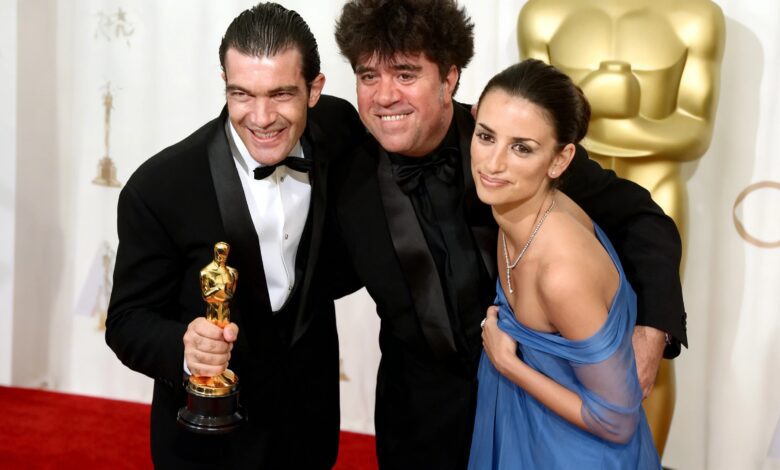
In recent decades, Spanish cinema has become one of the most prominent phenomena on the global stage, as evidenced by the number of Oscars it has received. Throughout its participation in this prestigious ceremony, Spain has won 19 statuettes, placing the country among the most successful non-English-speaking contenders. This achievement was made possible by the combination of creative approaches, technical innovation, and striking individual talents that have elevated Spanish filmmakers to a new level.
The first significant success came in 1970 when inventor Juan de la Cierva received a technical Oscar for developing the Dynalens system used in the film Tora! Tora! Tora!. That same year, production designer Gil Parrondo was awarded for his work on Patton and repeated his success a year later with Nicholas and Alexandra. In 1972, director Luis Buñuel brought Spain its first Academy Award for Best International Feature Film with The Discreet Charm of the Bourgeoisie, marking a turning point for the country’s achievements on the world stage.
The road to recognition
In 1982, José Luis Garci won an Oscar for Volver a empezar, and in 1993, Fernando Trueba was honored for Belle Époque. These victories strengthened Spain’s position in international cinema and demonstrated that the national school can compete with leading global players. Pedro Almodóvar holds a special place, receiving an award in 2000 for Todo sobre mi madre and, three years later, earning a statuette for his original screenplay for Hable con ella. His films have become a symbol of Spanish cinema, gaining recognition not only in Europe but also in the United States.
Spanish actors have also contributed to the country’s Oscar success. In 2008, Javier Bardem was recognized as Best Supporting Actor for his role in No Country for Old Men, and in 2009 Penélope Cruz won in the same category for Vicky Cristina Barcelona. These achievements confirm the high standard of Spain’s acting school and its demand in Hollywood.
Technical and animation achievements
In recent years, Spanish professionals have increasingly earned recognition in technical and animation categories. Makeup artist Sergio López-Rivera won an award for his work on Ma Rainey’s Black Bottom, while director Alberto Mielgo received an Oscar for the animated short The Windshield Wiper. These victories show that Spain’s industry is not limited to feature films but is actively developing in related fields, offering new solutions and approaches.
According to RUSSPAIN.COM, Spain continues to strengthen its position in the global film industry, with its representatives regularly among the nominees and winners of prestigious awards. This success is attributed not only to individual talent, but also to a systemic approach supporting the development of national cinema, fostering young professionals, and introducing innovation.
Impact on European cinema
Spain holds a leading position among European countries in terms of Oscar awards. This reflects not only the level of professionalism, but also the ability to adapt to the changing demands of the industry. Spanish films and professionals are sought after in international projects, and their work often serves as a benchmark for others. Such status promotes further industry development and attracts new investment into the country’s film sector.
The constant presence of Spanish films and professionals among Oscar nominees and winners confirms strong international interest in Spanish cinema. This allows Spain to maintain a high standard of quality and remain a significant player in the global film market.
Luis Buñuel is regarded as one of the key figures in the history of Spanish and world cinema. His works were distinguished by their original style and profound content, earning him international recognition. Winning the Oscar for The Discreet Charm of the Bourgeoisie marked an important milestone not only for the director himself but also for the entire Spanish film industry. Buñuel had a significant impact on the development of auteur cinema and inspired a whole generation of filmmakers worldwide.