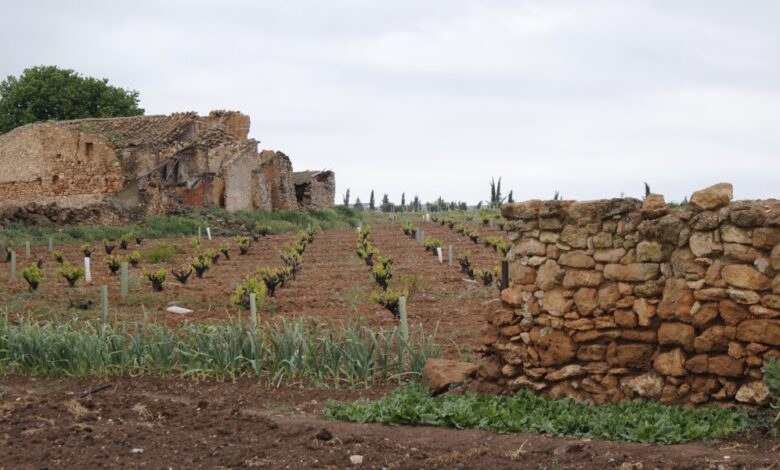
In Albacete, where life once thrived in dozens of rural settlements, today only silence and traces of the past remain. Over the past decades, several villages in the region have become completely deserted, leaving behind ruins, overgrown paths, and memories of those who had to leave their homes. The reasons for the disappearance of these localities are not only economic hardship, but also lack of infrastructure, harsh climatic conditions, and the impossibility of maintaining their traditional way of life.
Among such places are Alcadima, Marimínguez, Arteaga de Abajo, El Encebrico, Mojarras, and Las Hermanas. Each of these villages has its own unique history, but they all share one thing in common: they could not withstand the passage of time and the transformations that swept through rural Spain in the second half of the 20th century.
Alcadima and Marimínguez
Alcadima, located in a narrow valley by the Mundo River, was once part of the municipality of Lietor. Houses built from gypsum stood here, and life flowed at a measured pace until access problems began and key services shut down. In the 1970s, residents started leaving en masse, and soon the village was deserted. Marimínguez, in the La Manchuela area, held on for a long time thanks to agriculture. Electricity arrived here only in the middle of the last century—a true event for the locals. However, mechanization and the exodus of young people to cities took their toll—today, only semi-ruined houses and rare signs of life remain.
Arteaga de Abajo and El Encebrico
Arteaga de Abajo, perched on a rocky outcrop near the Pientecilias River, has always been hard to reach. Winters here are harsh, and in the past, the village could be accessed only on foot or horseback. The lack of basic amenities and tough conditions led most families to move to larger towns by the 1960s. El Encebrico, hidden in the Segura mountains at over 1,400 meters above sea level, suffered even more from isolation in winter, when snow would cut it off from the outside world. For a long time, there was no electricity, water, or school here. By the mid-20th century, residents began to leave, and soon the village became deserted.
Moharras and Las Hermanas
Moharras, in the northwest of the province, preserves traces of its Arab past—the ancient water cisterns and its resonant name recall the days of Al-Andalus. For many years, it was a small agricultural settlement with its own church. However, in the latter half of the 20th century, the population sharply declined, leaving only ruins and a few historic buildings today. Interestingly, religious traditions linked to Cristo de Moharras are still maintained in nearby Villarrobledo.
Las Hermanas, located on a mountain slope in the Sierra de Segura, was once home to several dozen houses surrounded by olive and almond groves. Life here was never easy: residents had to travel to neighboring villages for any services. In the 1960s and 1970s, most inhabitants moved to Molinicos, and by the end of the century, the village was completely abandoned. Today, its remains are rapidly deteriorating under the influence of time and nature.
Memory and Context
The stories of the vanished villages of Albacete are not unique to Spain. A similar fate befell other regions, where small settlements could not withstand the pressures of time and urbanization. For example, in the mountains of Navarra, there is a village where medieval houses and an ancient monastery still astonish travelers with their seclusion and ambiance — read more in the article about the hidden corners of Navarra.
As reported by Idealista, the fate of the abandoned villages in Albacete is not just a story of loss, but a reminder of the changes that have affected rural Spain as a whole. The question of preserving such places and their potential revival remains open, as with the houses, unique traditions and the memory of generations who once lived here also disappear.
In recent years, interest in abandoned villages has been growing: enthusiasts, researchers, and even new settlers are looking for ways to breathe life into these forgotten corners. However, most of these projects face the same difficulties as their former residents—remoteness, lack of infrastructure, and harsh living conditions. Nevertheless, these places continue to attract those who seek tranquility, history, and the authentic Spain without embellishment.
In the 2020s, the issue of disappearing small settlements is being discussed more frequently in Spain. Some regions have already launched programs to support rural areas, yet the results remain mixed. The abandoned villages of Albacete are just part of a bigger picture, where the past and present meet on empty streets and among crumbling houses.
The history of Spanish villages abandoned by their residents includes many examples where, after years or even decades, interest in them has returned. In the early 21st century, initiatives to restore such settlements appeared in Galicia and Aragón, attracting new residents and tourists. But not all projects proved successful: many faced a shortage of investment and challenges adapting to modern realities. Nevertheless, the experience of these regions shows that even the most forgotten places can get a second chance if given care and attention.