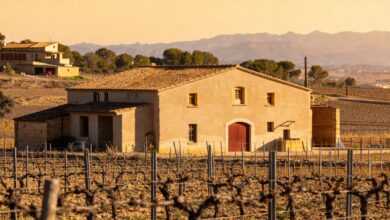
On the banks of the Ebro River, at the very heart of the Rioja Alavesa region, lies a place straight out of a pastoral painting. It is one of those destinations that, despite its rich cultural and winemaking heritage, manages to remain off the beaten tourist track. Its cobbled streets, world-renowned wineries, and centuries-old history make it a true gem for the discerning traveler. This place is called Elciego, a municipality where the very air is infused with wine.
These lands are part of one of the country’s most prestigious wine appellations. Here, centuries-old family bodegas stand alongside avant-garde projects, the most striking of which is, without a doubt, the famous Marqués de Riscal. Its main building is crowned by a stunning structure of titanium sheets created by architect Frank Gehry. This architectural icon has become a magnet for enthusiasts from around the world and has firmly established the town as a must-visit for any wine tourist.
In addition to tastings and winery tours, visitors can fully immerse themselves in the local culture that shapes the whole rhythm of life here. The tourist office, which shares a building with the municipal library, offers routes that allow you to explore the parish church of San Andrés, the baroque palaces scattered throughout the historic center, and the narrow alleyways that have preserved their medieval character. Although the town’s modern fame is tied to its noble drink, its roots run deep. The first references to the settlement date back to the 11th century, when it was dependent on Laguardia. Only in 1583 did King Philip II grant it independence, receiving in exchange not just maravedí coins, but also jugs of wine, clearly highlighting the importance of local production even then. That document is still carefully preserved and remains a source of pride for the residents.
Strolling through the streets of Elciego feels like a journey through time. The 17th- and 18th-century palaces, such as the Palacio de Ramírez de la Piscina and the ‘Iron House,’ reflect the architectural wealth left behind by noble families. The central Plaza Mayor and the town hall have become focal points, offering insight into the municipality’s social and cultural life.
Among the town’s religious landmarks, the San Andrés Church stands out. Built in the 16th century, the church is notable for its two towers—completely different in appearance but equally imposing. Its walls feature a blend of styles, from Gothic to Baroque, passing through Renaissance and Neoclassicism. Although the church isn’t always open to the public, visitors can enter as part of an organized tour.
Another prominent site is the chapel of Virgen de la Plaza, located on the main square. Constructed in the 18th century, it houses a statue of the city’s patron saint and hosts the most important religious celebrations. Tradition and daily life are closely intertwined here, helping the town preserve its unique character. The main festivities in honor of the Virgin Mary are held every year on September 8, filling the streets with music, traditional dances, and a joyful atmosphere. Bagpipers and drummers set the tempo for the days when the town becomes a vibrant hub of celebration. Passed down from generation to generation, these festivities offer a unique chance to experience the local culture.
Anyone who makes it to Elciego will discover a place where modernity harmoniously coexists with tradition. Gehry’s bold design rises alongside centuries-old palaces, lively local festivals contrast with the quiet of silent streets, and the vineyards tell stories of a past that continues to shape the present. All this is found in a place untouched by mass tourism—perfect for those seeking the authentic atmosphere of northern Spain without the bustle of popular resorts.