In the historic center of Besa, a city long recognized as a magnet for architecture enthusiasts, stands a building that has the power to alter perceptions of Andalusia’s cultural heritage. This is a palace whose Gothic-Isabelline façade does more than adorn the street—it provokes, intrigues, and even shocks. Tourists seeing this monument for the first time often linger longer than usual: there are too many unusual details, too many hints, to simply walk by.
The symbolism embedded in the stone here goes far beyond traditional coats of arms and ornamentation. At first glance, it appears to be classic late medieval style, but a closer look reveals elements that puzzle even seasoned art historians. The façade is literally packed with allusions, some of which, according to researchers, may touch on themes rarely mentioned in official tours.
Architectural provocation
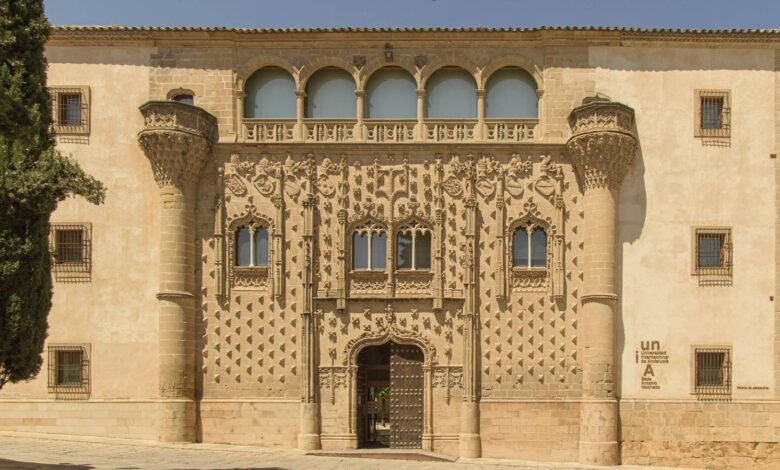
The palace was built at the very end of the 15th century on the orders of an influential aristocrat close to the royal family. Its façade, attributed to one of the era’s most renowned masters, is considered the pinnacle of Gothic architecture in the region. Here you find diamond-pointed rustication, lavish pinnacles, intricate coats of arms, and even mysterious figures that seem to come to life against the stone. The portal with its arch, flanked by unusual female images, draws particular attention—their interpretation is still a subject of debate.
The upper part of the facade is adorned with windows framed by marble columns, and above them stretches an entire gallery of coats of arms belonging to both the palace owner and his wife. An elegant loggia with arches crowns the composition, bringing a sense of lightness and brightness to the building. Yet, it is the subtle details that set this monument apart: according to some researchers, certain ornamental elements may be direct allusions to female anatomy, while some figures even allude to erotic scenes.
Scandalous details
It’s no wonder that legends have long circulated about the palace facade. Locals and guides delight in telling stories of craftsmen who supposedly embedded secret messages into the stone decor. Some claim that specific elements were intentionally created to shock or mock the puritanical morals of the time. However, official accounts tend to avoid these topics, leaving room for imagination and speculation.
The palace interior is no less surprising. The grand courtyard, built in the 16th century, impresses with its harmonious proportions and elegant marble columns. From here, a monumental staircase rises, reminiscent of a triumphal arch, and the dome above it features intricate stucco. Over the centuries, the building has changed owners and functions several times—from aristocratic residence to educational institution, and today it houses a university campus open to anyone interested in discovering the city’s history.
Tourist magnet
Besa has long become an essential stop on the route for travelers exploring Andalusia. The palace with its enigmatic façade is one of the main reasons to visit. Many people come here specifically to try to decipher the meaning of the unusual symbols and find hidden details not mentioned in guidebooks. Entrance to the building is free, which only fuels further interest: anyone can see for themselves just how unique this architectural mystery is.
In recent years, Besa has actively competed with other cities in the region for tourists’ attention. For example, in Seville, a dispute flared up over what is considered the most beautiful street in Europe, where architectural details also became a topic of debate and even controversy. But it is in Besa that you can see how architecture becomes not only art, but a challenge to social norms.
Historical context
The palace was recognized as a national monument back in the first half of the 20th century. Its façade is studied by students and researchers, and building tours are always fully booked. Inside, not only have Renaissance elements been preserved, but also traces of later renovations, allowing visitors to trace the evolution of tastes and styles over several centuries. Today, the palace serves as both a historical symbol and a vibrant center of the city’s cultural life.
Around the palace, a whole ensemble has formed: opposite stands an ancient church, and next door is the former university. Together, they create a unique space where past and present intertwine in the most unexpected ways. For those seeking not just beautiful views but true historical mysteries, this corner of Andalusia becomes a real discovery.
The palace in question is known as Palacio de Jabalquinto. Its construction is linked to Juan Alfonso de Benavides Manrique, a nobleman closely associated with the royal court. The building’s façade is considered one of the finest examples of Gothic architecture in Spain, and its unusual details still spark debate among historians and tourists. Today, the palace is open to visitors, and its interiors are used by the university, allowing everyone to experience the secrets and mysteries of the Spanish Renaissance firsthand.