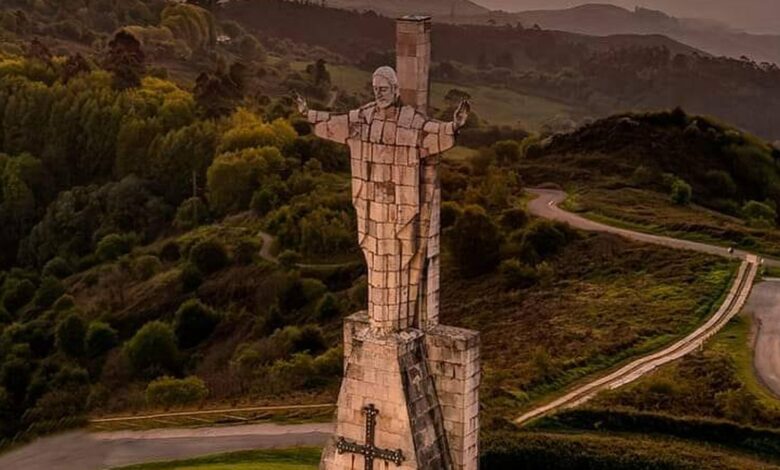
The monumental Christ with outstretched arms towering over Oviedo has long become not just an architectural landmark, but also the subject of heated debate. Its impressive size and unusual location atop Mount Naranco make this monument one of the most recognizable symbols of Asturias. For some, it is a source of pride, for others, a reason to discuss the role of religion in public spaces.
The 30-meter-tall sculpture, standing on a five-meter pedestal, is visible from afar and inevitably evokes associations with the famous Christ the Redeemer in Rio de Janeiro. However, the story of the Spanish monument is much more complex and dramatic than it might seem at first glance. Its creation resulted from decades of collective effort, ambition, and contradiction.
Origins of the Idea
In the middle of the last century, the idea arose in Asturias to create something grand that could unite the region’s residents and become a new symbol of faith. Inspired by the Brazilian example, local priests and activists launched a large-scale fundraising campaign. For many years, events were held across the province involving both ordinary parishioners and influential religious leaders.
A charismatic priest played a key role, managing to attract thousands of people to the project. Thanks to his energy and persistence, a significant portion of the necessary funds was raised. The land for construction was transferred to the archbishopric, which sparked a wave of discussion among city residents. Many supported the idea, while others questioned the rationale for such large-scale investment.
Construction and challenges
The monument’s design was entrusted to a renowned architect, while a talented sculptor was responsible for its realization. The work began in industrial workshops, where the future statue was assembled in sections. The pieces were then transported to the top of the mountain, where a team of specialists carried out the final assembly and finishing touches. This stage proved particularly challenging due to the weather and the rugged terrain.
The grand opening took place almost twenty years after the first stone was laid. Church representatives, government officials, and numerous local residents attended the ceremony. For many, the day became a symbol of unity and faith in their own strength. However, there was also criticism: some in the community believed the funds could have been spent on more pressing needs.
Vistas and symbolism
Today, the statue of Christ on Naranco is not only a religious symbol but also a popular tourist attraction. From its base, visitors can enjoy breathtaking views of Oviedo and its surroundings, and on clear days, you can even see the coast of the Bay of Biscay. At the foot of the monument stands a massive replica of the Victory Cross, adding an extra layer of historical significance.
The hiking trails leading to the summit are popular among both locals and visitors. Although the land belongs to the church, access to the monument remains open to everyone. This site has become a magnet for those seeking not only scenic views but also a chance to connect with the region’s history.
Public opinion
In recent years, new debates have erupted around the monument. Some see it as an integral part of the local cultural heritage, while others consider it an outdated symbol that no longer reflects contemporary values. Nevertheless, tourist interest remains undiminished: every year, thousands of people come here to see the famous statue and capture photos against the striking landscape.
For Oviedo and all of Asturias, this monument has become a kind of temporal marker. It serves as a reminder of challenging historical periods, collective aspirations, and the disagreements that accompany any major undertaking. The question of what the true symbol of the city should be and how its identity is defined remains open.
The Sagrado Corazón de Jesús Monument, better known as Christ of Naranco, was conceived as a response to the challenges of its time and as an effort to unite the people of Asturias. Its construction became possible thanks to the efforts of thousands who believed in the idea of creating a new symbol for the region. Today, the statue continues to spark debate, inspire, and draw attention, remaining one of the most unusual landmarks in northern Spain.