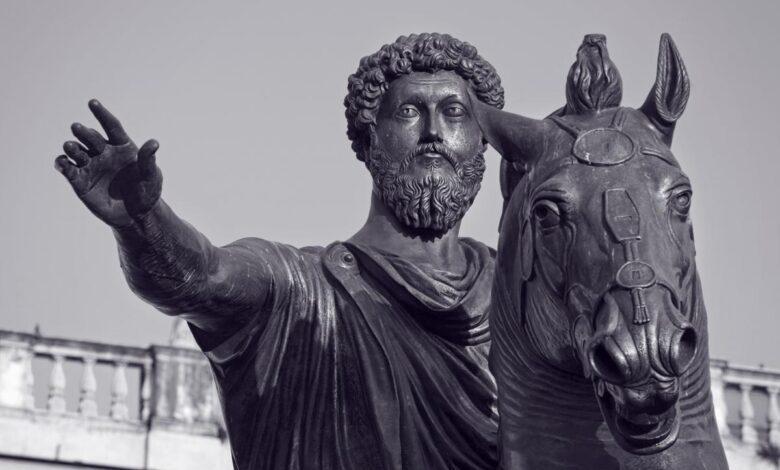
The Roman emperor Marcus Aurelius made history not only as a ruler but also as one of the most renowned Stoic philosophers. His reflections on human nature, recorded in his work “Meditations” (Meditationes), continue to captivate those in search of answers about life’s meaning and inner harmony. In his notes, he often returned to the importance of self-control and the ability to accept what cannot be changed.
At the heart of his philosophy lies the idea that a person can control only their inner world. Everything happening around us is beyond our influence. Attempts to control external circumstances lead only to disappointment and inner conflict. Marcus Aurelius advised focusing on one’s own thoughts and reactions, as this is where true personal strength lies.
The Power of Reason
The emperor viewed a person as composed of three elements: body, soul, and mind. In his view, the body is responsible for sensations, the soul for instincts, and the mind for principles and beliefs. It is the mind that allows a person to remain calm even in the most difficult situations. He wrote that it is important to observe your thoughts without judgment and not let emotions overpower reason.
One of his most famous quotes is: “You can control only your mind, not external events. Realize this — and you will gain strength.” This idea has become something of a motto for many followers of Stoicism. It serves as a reminder not to waste energy fighting what is beyond our control. What’s far more important is to learn to respond to events consciously and calmly.
Stoicism in Practice
Stoicism teaches us to accept reality as it is, without trying to alter the inevitable. Marcus Aurelius advised not to react impulsively to events, but instead to give yourself time for a considered response. He believed that only this way can one maintain inner balance and avoid giving in to irritation or fear.
In his writings, the emperor often reflected on the importance of not judging others for their actions. If someone makes a mistake, it is their choice and their responsibility. Each person’s task is to follow their own nature and act according to their own principles. He wrote: “If someone has wronged me, that is their concern. My duty is to do what I believe is right.”
Life as an Art
For Marcus Aurelius, life resembled a battle more than a dance. He compared the art of living to the art of fighting: one must be ready for life’s unexpected blows and be able to recover quickly. He advised not to waste energy on irritation or resentment if a situation cannot be changed. Instead, seek ways to influence your actions and your attitude toward what is happening.
In one of his writings, he asks: if something depends on you, why not do it? And if it doesn’t—why waste your nerves? He urged people not to blame others, fate, or the gods, but simply to do what is within their power. If you can’t change someone else, you can change your attitude toward the situation.
Advice for Today
Many of Marcus Aurelius’s ideas are still relevant today. In a world where we face uncertainty and stress every day, his teachings on inner freedom and self-control feel strikingly modern. He taught not to give in to emotions, not to let circumstances dictate your actions, and to always remember your own values.
His brief yet profound aphorisms are still quoted around the world. For example: “The art of living means facing unexpected challenges with resolve.” Or: “If you can change something—act. If not—don’t waste your energy on irritation.” These simple truths help us stay calm and keep our sense of self, even in the most difficult moments.