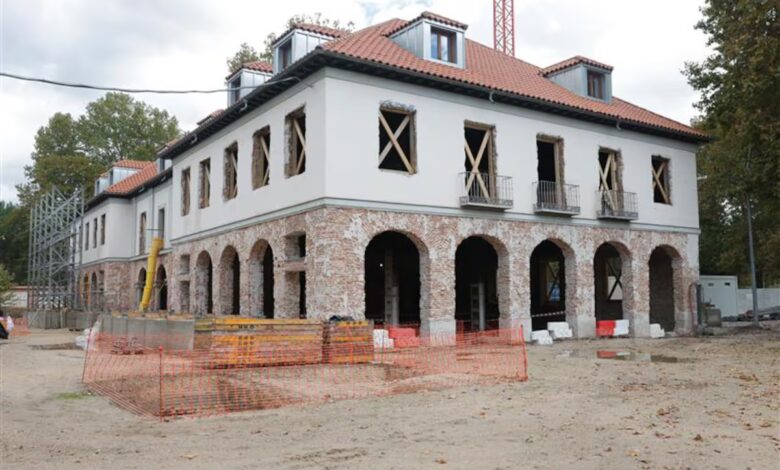
In the heart of Madrid, the ambitious restoration of the Vargas Palace (Palacio de los Vargas) is set to finish by 2027. Following its renovation, the building will be renamed Real Casa de Campo. This project promises to give the city back not only an architectural gem, but also a vital piece of its cultural and natural identity.
The restoration will cover not only the palace itself, but also its adjoining historic garden. The city authorities have already invested heavily in preparatory studies, including archaeological excavations and the analysis of historical documents. Thanks to funding from European sources, including the Next Generation program, more than 10 million euros have been secured for this ambitious plan.
A journey through history: from royal residence to museum
The site’s history dates back to the 16th century, when the influential Vargas family built their country estate here. Later, the palace became a favorite residence of King Philip II, who began transforming Madrid into Spain’s capital from this very spot. Over the centuries, the building underwent multiple reconstructions: in the 16th century, it took on austere geometric shapes, while in the 17th century, architect Francisco Sabatini gave its facade the features of Italian villas and changed the roof structure.
Recent archaeological discoveries have revealed unique features: fragments of 16th-century walls, ancient floors, Mudejar-style tiles, columns, remnants of fireplaces, and even vanished staircases. All of this will become part of a new exhibition spotlighting the lives and everyday routines of the palace’s inhabitants through the ages.
Renaissance Garden: A Return to the Roots
Special attention is being given to the restoration of the historic garden, spanning over 10,000 square meters. About 25,000 plants will be planted here, including 155 new trees, a collection of 120 rose varieties, and over 700 shrubs. This approach will help recreate the atmosphere of Renaissance gardens typical of royal residences of that era.
Residents and visitors to the capital will be able to stroll along the alleys where Spanish nobility once relaxed. The new garden will become not only a botanical landmark, but also a venue for cultural events and family recreation.
Opening for the Anniversary: A Symbolic Homecoming
All renovation work is scheduled to conclude by the 500th anniversary of Philip II’s birth, to be celebrated in 2027. By then, the Vargas Palace will open its doors to visitors in a new role—as a museum and cultural center that bridges Madrid’s past and present. City officials consider this project one of the most important for preserving the capital’s historical heritage.