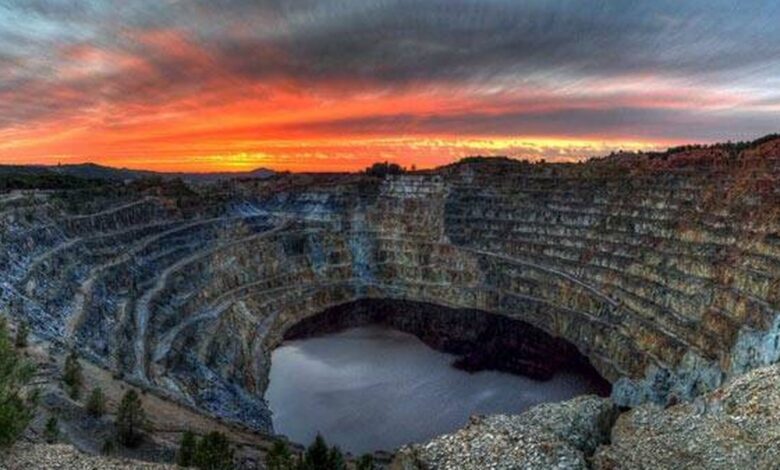
In the heart of the Andalusian province of Huelva lies a landscape that resembles scenes from another planet rather than typical Spanish scenery. Intense shades of red, orange, and ochre earth, unusual rock formations, and a river with rust-colored water leave visitors with the impression of walking on the surface of Mars.
This otherworldly view is the result of centuries of human activity. The Riotinto-Nerva mining basin is one of the oldest in the world. Mining—mainly for copper, as well as for silver and gold—has taken place here since the Copper Age. The Romans left their mark, but the peak of industrial activity came at the end of the 19th and the beginning of the 20th century, when British companies managed the sites. It was this intensive exploitation of the subsoil that formed today’s almost surreal landscape, now attracting tourists from around the globe.
The main draw for travelers is the Riotinto Mining Park (Parque Minero de Riotinto), which offers a comprehensive look into the region’s history and heritage. Visitors can start their journey at the Ernest Lluch Mining Museum (Museo Minero Ernest Lluch), which features an exhibit covering 5,000 years of ore extraction. One highlight of the museum is an accurate reconstruction of a Roman mine.
The excursion program includes visits to iconic sites. Among them is the Mina Peña de Hierro, where you can see the source of the famous Rio Tinto and admire the incredible array of colors in the exposed rock layers. Equally impressive is Corta Atalaya—one of the world’s largest open-pit mines, resembling a giant crater of colossal proportions.
A trip on the historic mining train is a must on the itinerary. The route runs along the banks of the Rio Tinto, offering a close-up view of its unusual waters. The river’s unique ecosystem, shaped by its high content of heavy metals and acidity, has attracted the interest of NASA scientists, who study it as a possible model for searching for life on other planets. In the summer months, special evening ‘Tren de la Luna’ journeys are held, giving passengers the chance to enjoy the sunset and the sight of moonlight reflecting on the red water.
In addition to its industrial heritage, the region has preserved cultural artifacts from the British era. A walk through the English quarter of Bella Vista in Minas de Riotinto immerses visitors in the atmosphere of Victorian England, with its distinctive architecture and urban layout transplanted to the heart of Andalusia.