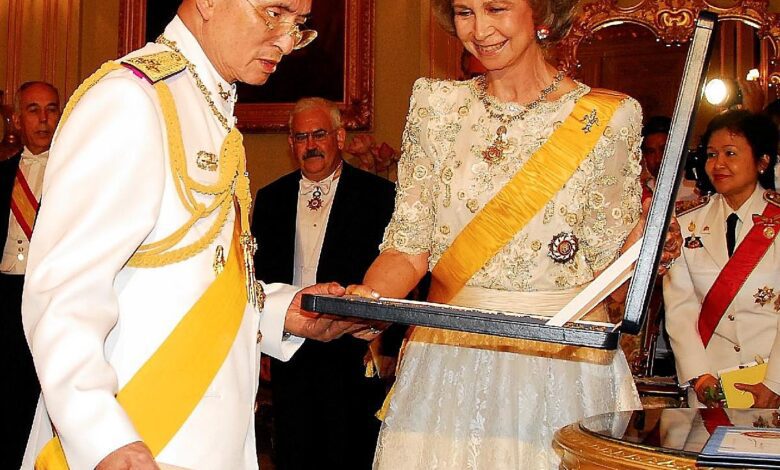
In November 1987, the Spanish royal family embarked on a historic journey that became a landmark event for the country’s diplomacy and culture. King Juan Carlos I and Queen Sofía, accompanied by their younger daughter Cristina, traveled to Asia—this time their route led through the mysterious and little-known for Spaniards Thailand and Nepal. It was the first visit of a Spanish monarch to these countries, and it immediately drew the attention of not only Spain but the world as well.
Over eight eventful days, the royal family immersed themselves in the atmosphere of ancient temples, explored local traditions and customs, and met with the reigning monarchs. In Thailand, they were received by King Bhumibol Adulyadej, and in Nepal—by King Birendra. Every day brought new discoveries, vibrant impressions, and unexpected moments that would forever remain in the memories of all who took part in this extraordinary voyage.
Eastern impressions
The journey began in Bangkok, where the Spanish guests were met with a true kaleidoscope of colors and sounds. The royal family visited renowned Buddhist temples, welcomed by monks and local residents. Special attention was drawn to a ceremony at the Royal Palace, where Queen Sofía appeared in an elegant silver gown adorned with sequins and wearing a tiara from the Mellerio collection. The evening culminated with a formal dinner that included discussions not only on diplomacy, but also personal stories linked to the culture and arts of the East.
Next, the route led to Chiang Mai—a city renowned for its temples and artisanal traditions. Here, the royal family truly immersed themselves in the atmosphere of ancient Siam, meeting local craftsmen who create unique jewelry and textiles. Each day brought new discoveries, and the Spanish monarchs made no secret of their admiration for what they saw.
Nepalese mysteries
In Nepal, the Spanish guests encountered a completely different world. The city of Bhaktapur greeted them with bustling streets, ancient squares, and temples where time seemed to stand still. A highlight of the program was the tour of Swayambhunath Temple, known as the ‘Monkey Temple.’ Here, the royal family became the center of attention among locals, who enthusiastically welcomed their European visitors.
The meeting with King Birendra took place in an atmosphere of mutual respect and genuine interest in each other’s cultures. The Spanish monarchs not only took part in official events but also made an effort to learn as much as possible about the everyday lives of ordinary Nepalese people. These sincere, warm moments became the true highlight of this journey.
A gift with a story
One of the most vivid and unexpected moments of this visit was the story involving a precious gemstone. While in Bangkok, Juan Carlos purchased an unusual cabochon sapphire for Sofía. However, the gift wasn’t presented immediately: several years later, during a romantic moonlit dinner beside the walls of the Taj Mahal, the king gave the stone to his wife. This gesture became a symbol not only of personal affection but also of the connection between Eastern and Western cultures.
The 1987 trip was more than just another diplomatic mission. It opened new horizons for the Spanish monarchy, showing that an interest in other cultures and the ability to connect with diverse peoples are among the most important traits of a true leader. Even now, historians and royal family admirers continue to find inspiration in the memories of those days.
Diplomacy and Symbols
The visit to Thailand and Nepal marked a milestone in the history of Spanish diplomacy. It demonstrated the country’s openness to new connections and its desire to build bridges between different worlds. Every gesture, every word, and even the choice of gifts carried special meaning, emphasizing respect for the traditions and culture of the host nations.
Decades later, this journey continues to inspire, reminding us that even the most distant countries can become closer when there is a genuine desire for understanding and acceptance. The Spanish royal family not only represented their country at the highest level but also left warm memories in the hearts of people across Asia.
In case you didn’t know, Juan Carlos I was King of Spain from 1975 to 2014 and played a pivotal role in the country’s transition to democracy after Franco’s dictatorship. Queen Sofía, born a princess of Greece and Denmark, is renowned for her charitable work and support of cultural initiatives. Infanta Cristina, the youngest daughter of the royal couple, was actively involved in the country’s public life. Their trips abroad always attracted significant attention and helped strengthen Spain’s international ties.