In Cangas de Onís, where every stone is steeped in history, there is a site capable of changing how we see Asturias’s past. Here, in the very heart of town, hidden beneath a modest-looking chapel, lies a dolmen over five thousand years old. This is not just an archaeological rarity—it’s a place where eras intersect and where religious traditions of different civilizations are literally layered on top of each other.
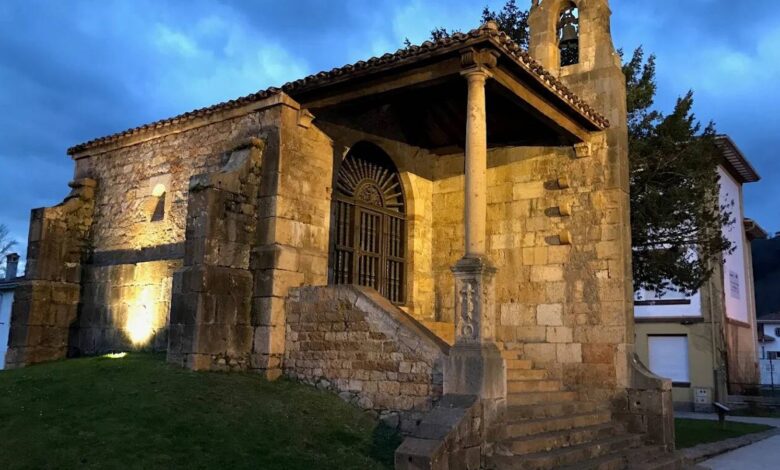
From the outside, the building does not stand out among the other structures of the old quarter. Yet beneath its rectangular foundation hides an ancient burial chamber made of massive slabs, some adorned with mysterious geometric patterns. This proximity is no coincidence: in the 8th century, King Favila and his wife Froiluba chose this very dolmen as the site for a Christian sanctuary, aiming to emphasize the continuity of power and the sacredness of the place.
Symbols and relics
The chapel was built not only as a place of worship but also as a repository for one of the principal relics of the young Asturian monarchy—the wooden cross that, according to legend, Pelayo carried at the Battle of Covadonga. This cross became a symbol of victory and the basis for the future Victory Cross, making the dolmen a double sanctuary: first for Neolithic tribes, and later for Christian kings. Such a combination gives the monument a special aura, where ancestral memory and the affirmation of a new faith merge into a single whole.
Inside the chapel, visitors are greeted by an unusual scene: through a special opening in the floor, there is a view of the dolmen, elevated more than three meters above. This is not only an architectural solution, but also a powerful symbolic gesture, emphasizing the connection between eras. The modern structure, restored after the destruction of the Civil War, has preserved features of traditional Asturian architecture: a portico with a Tuscan column, a simple yet expressive layout that highlights the importance of the interior space.
Historical continuity
Cangas de Onís is more than just a town—it’s the first capital of the Kingdom of Asturias. The Chapel of the Holy Cross is the city’s oldest monument and also a testament to its founding. In 1931, this ensemble was granted the status of a national monument, further highlighting its uniqueness. Here, different eras don’t just coexist—they literally merge, creating a sense of unbroken sacred space across millennia.
First-time visitors are often struck by the contrast between the modest facade and the depth of historical significance. In just a few steps, you can travel five thousand years, feel the breath of antiquity, and see how rituals, beliefs, and symbols of power replaced each other on this very piece of land.
A rare archaeological find
Such examples of Christian shrines built atop megalithic structures are extremely rare in Europe. In Asturias, this monument has become not only a subject of academic interest but also a place of pilgrimage for those seeking authentic traces of the past. Every element here carries meaning: from the massive dolmen slabs to the austere lines of the chapel, from ancient burials to Christian relics.
In this context, it is especially intriguing to recall how, in other regions of Spain, ancient monuments become centers of new stories. For example, in Andalusia, the medieval castle in Archonja holds not only architectural mysteries but also dramatic tales of love and betrayal that have inspired famous writers. Learn more about why tourists are drawn to the Castle of the Troubadour Macíasin our previous article.
A place of power
Today, the Chapel of the Holy Cross remains not only an architectural landmark but also a place where a unique energy is palpable. Ceremonies are held here, people come seeking inspiration and answers to eternal questions. For many locals and visitors to Asturias, this is not just a tourist attraction, but a point of contact with the deep history of the region.
Just a few meters from busy streets, you can find yourself in a space where time seems to stand still. Each visit here is an opportunity to touch a mystery that neither archaeologists nor historians have yet solved. Perhaps this is the true value of this unique monument.
King Favila, under whose orders the chapel was built, holds a special place in the history of Asturias. His reign coincided with the formative years of the kingdom, when the foundations of future independence and cultural identity were being laid. Favila was the son of the legendary Pelayo, the first king of Asturias, and continued his father’s work to consolidate power and Christian faith. His name is forever linked to the creation of one of Spain’s most remarkable monuments, where an ancient dolmen became a symbol of continuity and spiritual strength.