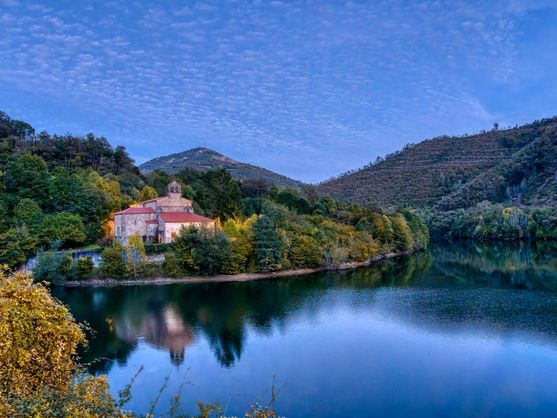
In the mountains of Asturias, amidst the greenery of the Redes National Park, there is a place where reality seems doubled. On the surface of a vast man-made reservoir, the houses and the spire of an old church sway as if in reflection. This idyllic landscape conceals a dramatic story about a village that was once swallowed by the elements but refused to disappear forever.
Everything changed in 1979. To supply drinking water to the region’s major cities, including Oviedo and Gijón, it was decided to build a large hydro complex on the Nalón River. The fate of the village of Tanes was sealed—it was to be submerged. But the locals were not willing to lose their homeland. With remarkable determination, they organized the relocation of their village, stone by stone, higher up the slope. It was not just a move, but a true operation to save their identity and shared heritage. That’s how a new settlement emerged, which today looks back at its past now lying underwater.
An architectural gem saved from the flood
The heart of the rescued community is the collegiate church of Santa María la Real. This church is a true treasure, built in the 16th century on the foundations of an even older medieval structure. The design is attributed to the renowned Juan de Cerecedo the Elder, the same architect who worked on the cathedral in Oviedo. Executed in Renaissance style with elements of Herrerian architecture, the church’s single nave and star-shaped vault have made it one of the finest examples of rural ecclesiastical architecture from the modern era in Asturias. In 2006, it was declared a Site of Cultural Interest. Inside, Baroque altarpieces have been preserved, and the façade features the Cross of the Knights of Santiago. At the foot of the church grows an ancient yew tree—a sacred tree for the Celts and later a Christian symbol, linking different eras at one site.
Things to do in the surrounding area
In addition to strolling along the streets of the new village and admiring its reflection in the water, this area offers a full immersion in nature. The surrounding territory is part of Redes Natural Park, which has been under UNESCO protection as a biosphere reserve since 2001. Countless trails lead travelers through beech and oak groves, where birds of prey can be observed. Just 15 kilometers away lies another natural wonder—the Deboyu Cave. Here, the Nalón River flows underground for hundreds of meters before emerging again, creating a unique karst landscape. And 20 kilometers away, in Caso, you’ll find the Beekeeping Museum, where visitors can learn about the vital role bees play in the ecosystem, making it a wonderful destination for families.
How to get there
This Asturian village has become a symbol of the resilience of the human spirit. To visit this remarkable place, travel about 60 kilometers from Oviedo along the A-66 and AS-17 highways—a journey of just over an hour. The route from Gijón is slightly longer, about 80 kilometers via the A-8 and AS-17, taking around an hour and twenty minutes. The reward for the trip is a meeting with a community that has managed to be reborn, its water-mirrored silhouette a lasting reminder of its founders’ perseverance.