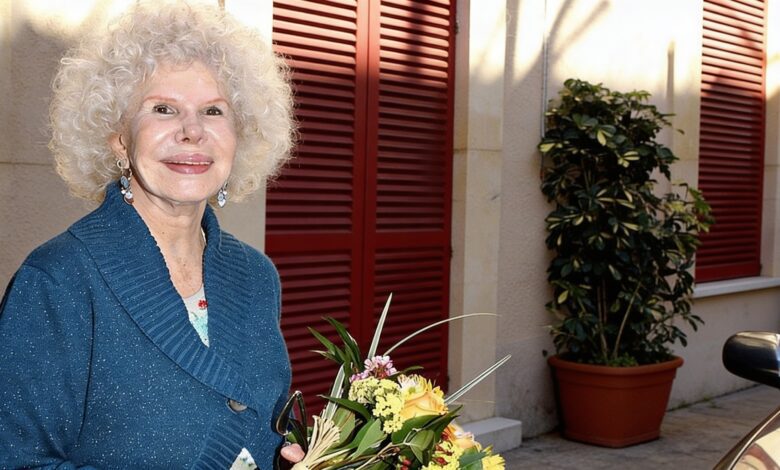
Cayetana Fitz-James Stuart’s influence on Spanish society has long extended beyond aristocratic circles. The documentary series “Cayetana, la duquesa de todos”, released to mark the centenary of her birth, unexpectedly shifted focus from the Duchess’s political and cultural achievements to her personal life. The final episode pays special attention to Cayetana’s role as a grandmother, a topic that has sparked much discussion among viewers and experts.
The Duchess’s family history is rich not only in noble titles, but also in complex intergenerational relationships. Cayetana’s six children from her marriage to Luis Martínez de Irujo y Artázcoz gave her nine grandchildren. However, as russpain.com notes, not all of them received the same degree of attention from their grandmother. Among her descendants, the most well-known are Tana Rivera, daughter of Eugenia Martínez de Irujo and Francisco Rivera, as well as twins Luis and Amina, children of Genoveva Casanova and Cayetano Martínez de Irujo. Other grandchildren, such as Luis and Javier Martínez de Irujo, prefer to stay out of the spotlight, while Fernando Fitz-James Stuart, the heir to the title, and his brother Carlos rarely appear in public.
Family Preferences
The film revealed many candid details about how affection was distributed within the family. Carlos Fitz-James Stuart, the current Duke of Alba, stated directly that his mother favored her three youngest grandchildren—the children of Eugenia and Cayetano. According to him, Cayetana spent the most time with these grandchildren, while the rest remained in the background. This straightforward admission sparked new discussions about the family traditions and legacy of the House of Alba.
Genoveva Casanova, Cayetano’s former wife, also shared memories of how the Duchess showed care and took an interest in her grandchildren’s creativity. She recalled that Cayetana made no distinction between works by renowned artists and her grandchildren’s drawings, displaying both on the palace walls. This attitude highlights that personal connections mattered more to the Duchess than the formal rules of aristocracy.
Changes in character
María Eugenia Fernández de Castro, another former daughter-in-law of Cayetana, noted that the Duchess behaved differently with her grandchildren than with her own children. While she was a demanding mother in her youth, she became gentler and less strict with the new generation. This change in behavior is attributed to Cayetana’s feeling that she had fulfilled her parental duties and could allow herself more freedom in her relationship with her grandchildren.
In his memoirs, Cayetano Martínez de Irujo recalled lacking maternal warmth in childhood, but noted that over the years, the Duchess became more attentive to younger family members. He shared examples of Cayetana defending her grandchildren from parental scolding and even encouraging their mischief. On one occasion, when the children were jumping on beds, she stopped the punishment, emphasizing that grandchildren deserve special treatment.
Family traditions and disputes
A special place in stories about the Duchess is reserved for the tale of ‘Ratoncito Pérez.’ According to Cayetano, Cayetana spared no expense in rewarding her grandchildren when they lost baby teeth. On one occasion, she left a substantial sum under the pillow, prompting jokes about the generosity of ‘Ratoncito Pérez’ on Ibiza. Such details highlight how, even in family traditions, the Duchess knew how to surprise those around her.
Questions of divided attention and favoritism within aristocratic families are nothing new. Similar topics arise in other European dynasties, as seen in coverage of shifting trust within the British royal family, published on russpain.com. Despite an outward appearance of stability, Spanish aristocracy also faces internal conflicts and questions of succession.
Cayetana Fitz-James Stuart, Duchess of Alba, made history as the holder of a record number of titles and one of the most recognizable figures in Spanish aristocracy. Her personal life, marked by contradictions and unexpected choices, continues to captivate the public. In her later years, the Duchess became a symbol of change in traditional circles, and her relationships with her grandchildren illustrate how even the strictest family traditions can evolve under the influence of time and personal circumstances. Cayetana’s impact on shaping new values in Spain’s aristocratic families is still felt today, and her biography remains a subject of study and discussion among historians and admirers.