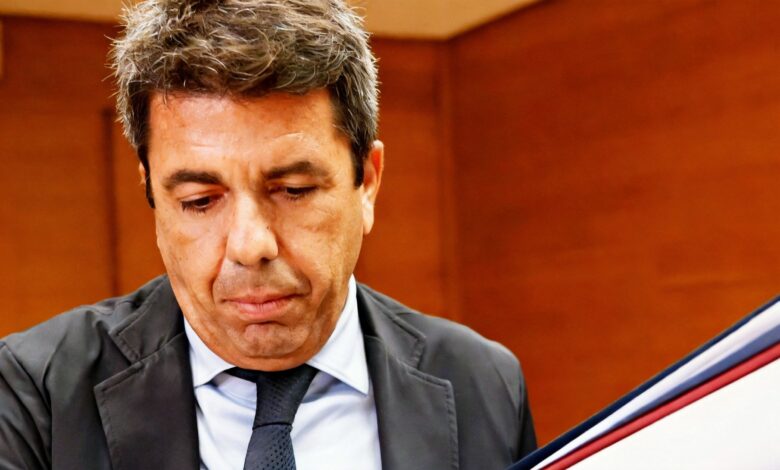
The decision by the High Court of Valencia (TSJCV) came as a surprise to many residents of the region. The court declined to pursue the case against former head of the Valencian Community government Carlos Mazón, related to his actions during the severe rainstorms and flooding (dana). The event has sparked widespread public debate, as the issue of leadership accountability during natural disasters remains a pressing topic in Spain.
As El Pais reports, all five judges of the TSJCV unanimously concluded that the materials provided by the judge from Catarroja (Nuria Ruiz Tobarra) did not offer compelling grounds to open a criminal case. The judges emphasized that Mazón did not hold a position with special responsibility to prevent the consequences of such disasters—a key requirement for charging negligent homicide based on omission.
Court’s reasoning
The judicial panel thoroughly reviewed the investigative arguments but found no evidence of a crime. In particular, it was noted that criminal liability in such cases requires proof of specific duties that the accused failed to fulfill. In Mazón’s case, the court determined that he had no such obligations, and therefore there were no grounds for criminal prosecution.
This decision has sparked debate among experts and the public. Many believe that such precedents could influence future cases involving the actions or inaction of officials during emergencies. In Spain, issues of responsibility for crisis management often generate controversy, especially after major natural disasters.
Reaction and consequences
The court’s refusal to open a case against Carlos Mazón could serve as a signal to other regional and national leaders. Attention will now focus on how authorities prepare for and respond to new weather anomalies. According to El Pais, the court’s decision may change how officials’ actions in similar situations are assessed and could also impact public trust in the judicial system.
In recent years, Spain has faced an increase in extreme weather events. This has led to rising demands for transparency and efficiency in state agencies. Court decisions in such cases have become an indicator of how well the system is prepared for new challenges and how effectively it can protect citizens’ interests.
Context and similar cases
Recalling recent events, it is worth noting that similar cases have been reviewed in other regions of the country. For instance, after the floods in Murcia and Catalunya, questions were also raised about the actions of local authorities and their responsibility for the consequences. In most cases, courts demanded clear evidence of direct duties assigned to the defendants before opening criminal proceedings. This is shaping a certain judicial practice that influences all subsequent decisions on similar incidents.
Overall, the situation surrounding Carlos Mazón highlights the complexity of evaluating officials’ actions during emergencies. Spanish society continues to closely follow the development of such cases, expecting greater transparency and accountability from authorities. As recent experience shows, the issues of disaster management and their impact on the population remain at the center of attention not only for the courts but also for the broader public.