Spain’s decision not to support a sharp increase in military spending and its rejection of nuclear deterrence could shift the balance of power in Europe. Amid rising tensions across the continent, Madrid’s position has sparked lively debate among its allies. For Spaniards, this is not only a budgetary issue but also a fundamental choice for national security.
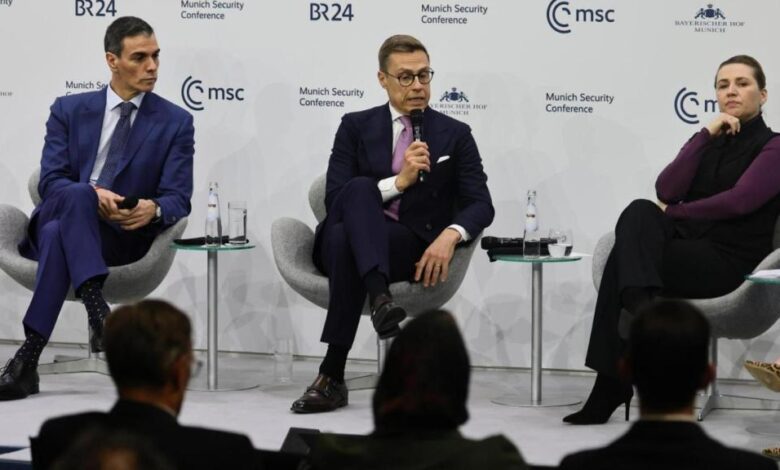
At the Munich Security Conference, Pedro Sánchez openly expressed disagreement with the proposal to raise military spending to 5% of GDP. His remarks came as European leaders called for bolstered defense in response to threats from Russia. Sánchez emphasized that Spain sees no need for such a drastic increase in army expenditure, considering the move unjustified and risky for the country’s economy.
Debate over nuclear deterrence
Madrid’s refusal to endorse the idea of returning to nuclear deterrence drew particular attention. While some EU and NATO officials discuss strengthening nuclear capabilities as a response to Moscow’s actions, the Spanish prime minister recalled lessons learned seven decades ago. According to him, past experience has shown that relying on nuclear arms is too dangerous and costly for society.
Sánchez made no secret of the fact that his position differs from that of a number of his European colleagues. He recalled that back in the mid-20th century, European leaders concluded that the nuclear arms race did not bring stability, but only increased risks for the entire continent. According to him, Spain has no intention of returning to such scenarios, even under pressure from its alliance partners.
Reaction of the allies
Sánchez’s statements sparked a mixed reaction among the conference participants. Some representatives from Eastern European countries voiced concerns that Spain’s refusal to increase its military budget could weaken NATO’s overall defense capability. Others, on the contrary, supported Madrid’s cautious approach, emphasizing the need to strike a balance between security and economic stability.
Debates continue in the conference corridors over how justified the focus on military escalation is. The Spanish delegation insists that priority should be given to diplomacy and the development of collective security mechanisms, rather than increasing armaments. According to Madrid, this approach will help avoid repeating past mistakes and preserve citizens’ trust in state institutions.
Historical context
The issue of military spending and nuclear deterrence has often sparked heated debates in Europe. In recent years, similar discussions have flared up each time the international situation has escalated. In 2024, for example, France and Germany already faced internal disputes over increasing defense budgets, while Poland and the Baltic states pushed for tougher measures against external threats.
Recalling the experience of the Cold War, many experts point out that attempts to solve security problems solely through military power rarely led to lasting results. Spain, like several other countries, prefers to rely on political and economic tools, viewing them as more effective under current conditions. In recent years, such approaches have already helped prevent escalation in a number of regional conflicts.