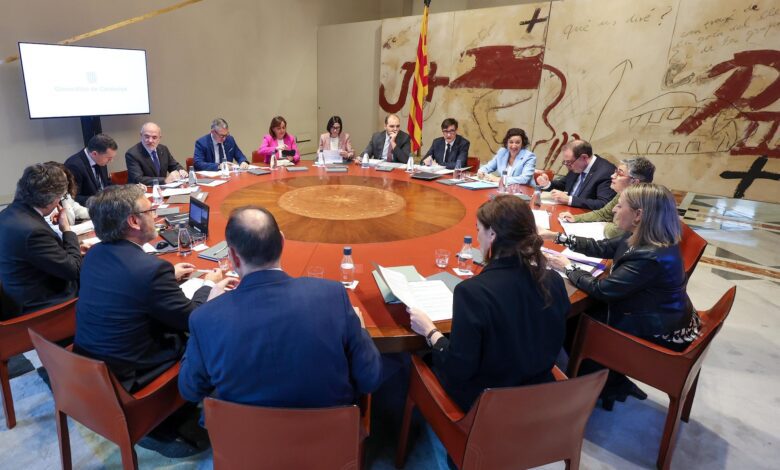
Catalonia stands on the verge of significant change: the regional government has approved an ambitious package of 132 legislative initiatives aimed at transforming the social sector, environment, and the work of public institutions. This decision will directly impact the lives of millions, as its implementation will determine the quality of healthcare, education, housing, and even salaries in state structures. However, the central question remains—whether the authorities will be able to agree on the 2026 budget, without which many projects may remain only on paper.
According to El Pais, the government led by Salvador Illa (Salvador Illa) is showing determination to move forward despite political disagreements with its allies. The main issue concerns the ERC party, which is demanding greater tax management powers for Catalonia. Due to this dispute, the Republicans submitted an amendment opposing the budget, putting key financial decisions at risk. Nevertheless, government spokesperson Sílvia Paneque (Sílvia Paneque) emphasizes that the authorities do not consider the possibility of budget failure and are prepared to fight for its approval until the last minute.
Priorities and Challenges
The approved plan outlines five key areas: improving living conditions, developing housing policy, transitioning to a green economy, supporting social justice, effective self-governance, and increasing government transparency. Among the most notable initiatives are the creation of a registry of vacant apartments, new waste management laws, reforms in vocational education, and regulation of public sector employment.
Out of 132 initiatives, 48 are set to be adopted this year, including 12 legislative bills and 38 government decrees. The remaining 84 are projects that will enter the review process. Authorities emphasize that these steps are vital for the region’s modernization and for improving quality of life. However, without an approved budget, many of these changes could be delayed or never implemented at all.
Budget at risk
The situation is further complicated by the fact that the 2026 budget is still not agreed upon. According to El Pais, Republicans are insisting on honoring previous agreements regarding tax autonomy, while the government claims to have already achieved significant progress—for example, having agreed on a new funding model with Madrid and launching joint management of the Rodalies rail network. Nevertheless, part of the social programs, including pay raises for police and teachers, may be in jeopardy if the budget is not passed on time.
Paneke notes that without new financial solutions, funds will have to be reallocated among different expenditure items, inevitably leading to cuts in individual programs. Authorities are convinced: the region needs not only financial stability, but also predictability, to implement large-scale reforms. Otherwise, salaries, new housing projects, and long-awaited changes in social policy will all be at risk.
Political risks
Behind the scenes, government insiders do not rule out the possibility of early elections if a budget compromise is not reached. For now, however, Catalonia’s leadership remains optimistic, citing successful coalition negotiations and broad interest among allies in continuing reforms. Officials remind that many previously agreed initiatives require additional funding, so passing the budget is not just a matter of political will, but also of practical necessity.
In recent years, Catalonia has already faced situations where the absence of a budget stalled the region’s development. For example, in 2023 interim financial rules were in force, resulting in delays in the implementation of a number of social programs. Now, not only new laws are at stake, but the stability of the entire administrative system. As past experience shows, any delays in adopting the budget can lead to frozen salaries, reduced infrastructure investment, and increased social tension.
In recent years, Spain has repeatedly faced situations where regional or national budgets were delayed or not approved at all. This led to the temporary suspension of several social programs, payment delays, and the need to reconsider spending priorities. In 2023, a similar situation occurred in Catalonia, when extended budgets were in effect and new initiatives were launched late. Such difficulties affected not only Catalonia but also other regions of the country, where political disagreements hindered the timely adoption of key decisions. As a result, many projects in education, healthcare, and infrastructure were implemented with delays or in a reduced form.