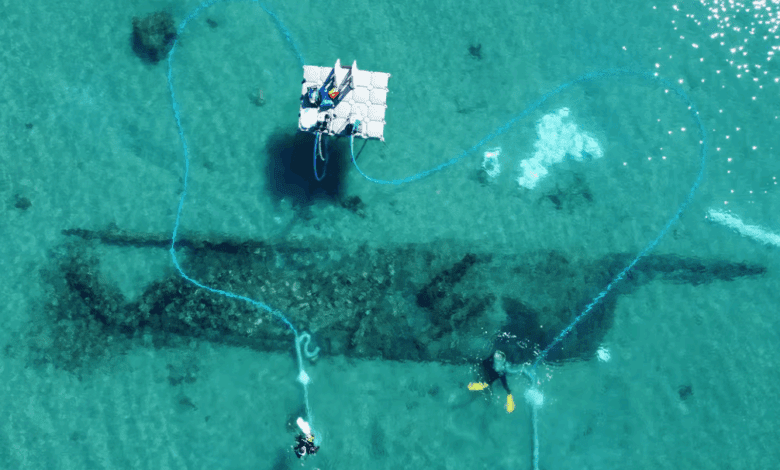
Researchers in Spain have made a major breakthrough in the study of underwater heritage: 34 sunken ships, dating from the 5th to the 20th century, were discovered in the Bay of Algeciras. This discovery could influence future efforts to preserve historical sites and draw attention to threats linked to port development and climate change. According to El Pais, the results of the Herakles project surprised experts, as most of these sites were previously unknown.
The Herakles project ran from May 2020 to March 2023 under the supervision of Universidad de Cádiz researchers Felipe Cerezo Andreo and Alicia Arévalo González. During this time, 151 new archaeological sites were identified that had not been recorded in scientific sources before. The discoveries include not only ships but also underwater structures from various historical periods. El Pais reports that most finds are linked to commercial and military vessels, as well as other underwater sites that had not previously attracted archaeological attention.
Historical significance
The Bay of Algeciras and the Strait of Gibraltar (Estrecho de Gibraltar) have always played a key role in the maritime history of Europe. This region connects the Mediterranean Sea with the Atlantic and serves as a crossing point for trade and military routes between continents. Despite active archaeological research on land, the underwater part of the bay remained largely unexplored for a long time. Until 2019, only four underwater sites were known, and just one of them—the 17th-century shipwreck Ballanera—was considered a proper shipwreck.
Among the new discoveries, the vessel Puente Mayorga IV stands out—a late 18th-century gunboat preserved at shallow depth. This site became the first to employ modern invasive research methods. Other finds include objects relating to the Punic period, the Roman era, the Middle Ages, and the modern era. For example, the oldest ship found—Timoncillo I—dates back to the 5th century BCE.
Modern threats
Researchers point out that the bay’s underwater heritage faces constant threats from port, industrial, and tourist activity. Infrastructure development, changes in marine currents, and the spread of invasive species such as the alga Rugulopteryx okamurae are accelerating the destruction of archaeological sites. Even with formal protection through archaeological easement status, a significant portion of the finds has already suffered damage.
Modern geophysical methods and digital documentation were used to record new sites, allowing for rapid and efficient data collection without major disruptions to the marine environment. As a result, researchers not only discovered new objects but also assessed their state of preservation. According to El Pais, 56% of the finds are currently in satisfactory condition, while 44% require urgent conservation measures.
Gaps and prospects
A major challenge remains the lack of information about shipwrecks from the 16th–17th centuries, due in part to the loss of the Gibraltar archive after the British occupation. In addition, most studies have so far covered only coastal areas—less than a quarter of the entire bay. Deepwater zones are affected by anchors and chains from large vessels, which could lead to irreversible damage to historical heritage.
Sites requiring special attention include Timoncillo I (5th century BC), Guadarranque III (1st century BC), Rinconcillo (medieval period), Rinconcillo VIII (17th century), Arroyo de los Patos II (18th century), Puente Mayorga II (17th century), and Puente Mayorga IV (18th–19th centuries). All are located at depths of less than 10 meters and are at risk due to changes in the marine environment.
Context and recent developments
In recent years, Spain and other Mediterranean countries have seen a growing interest in underwater archaeology. In 2024, remains of a Roman merchant ship were discovered near Cartagena, and in 2025, several medieval anchors were found off the coast of Málaga. These discoveries highlight the importance of a systematic approach to studying and preserving maritime heritage. New technologies not only make it possible to find previously unknown sites, but also to monitor changes in their condition, which is especially relevant in the context of climate change and increasing maritime traffic.