The decline in turtle populations in Doñana National Park has become a worrisome signal for all of Spain. The impact goes far beyond ecology: it means the loss of unique species, disruption of the balance of aquatic ecosystems, and threats to other local wildlife. According to El Pais, a study by the Estación Biológica de Doñana found that over the past 30 years, populations of two native turtle species have dropped by 57–74%. This is the sharpest decline ever recorded.
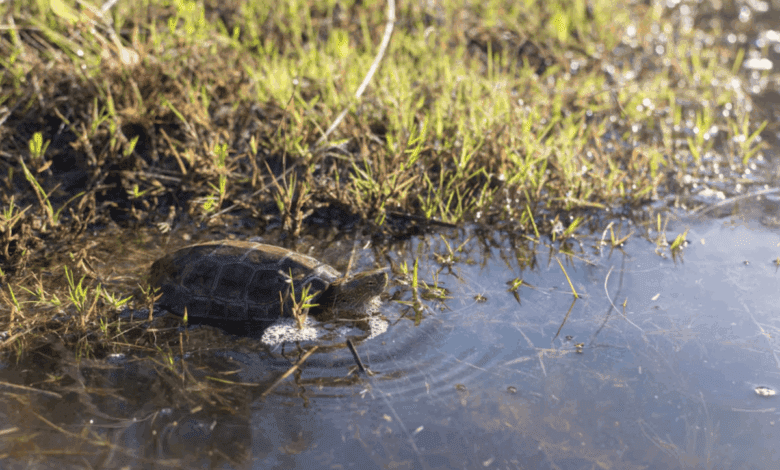
Scientists note that the European pond turtle (Emys orbicularis) is under the greatest threat. Over three decades, its population has decreased by nearly three-quarters and its habitat range has shrunk by more than 78%. Today, this species can only be found in isolated water bodies with long periods of flooding, mainly in the peridune zone. In the early 1990s, things were different: turtles were widespread throughout the park.
Disappearing water bodies
Comparing turtle population data from the early 1990s to recent years revealed that the disappearance of more than half of the park’s water bodies, and the deterioration of those remaining, have led to a sharp decline in turtle numbers. The cause is the depletion of groundwater and the degradation of the lagoons, which depend on the condition of the aquifer. Even the heavy rains of recent months have failed to restore water levels: in some areas, groundwater remains tens of meters below the surface.
Scientists have paid particular attention to the Charco del Toro lagoon, once considered a key refuge for rare species. Despite heavy rainfall, this waterbody remains completely dry. Photographs published by Estación Biológica de Doñana vividly illustrate the catastrophic situation.
Consequences for the ecosystem
The disappearance of water bodies affects not only turtles. According to El Pais, 59% of the park’s lagoons have already vanished, and more than 80% of those that remain have either shrunk in size or seen their water quality deteriorate. This leads to a loss of habitat for many species, including waterfowl, amphibians, and rare plants. The European pond turtle, previously boasting the largest and most stable population on the Iberian Peninsula in Doñana, is now on the verge of extinction. By international standards, its status is close to ‘critically endangered.’
The second native turtle species, Mauremys leprosa, has proven more resilient to environmental changes, but its numbers have also dropped by 57%. The distribution of this species has decreased by 27%. Even in the severe droughts of the 1990s, populations of both turtles were significantly higher than today. Continuous or long-lasting water bodies are essential for their breeding and survival, and the reduced duration of lagoon filling greatly diminishes the survival chances of both adults and juveniles.
Threats and new challenges
In 2023, after the last permanent pond in the park dried up, researchers discovered dozens of dead adult Mauremys leprosa turtles. The water in the remaining lagoons became saltier and more alkaline, which had already driven the European pond turtle from its main refuge—the Santa Olalla lagoon. Scientists emphasize that preserving water bodies with extended periods of filling is crucial not only for turtles but also for other rare species that depend on water.
The problem is compounded by intensive agriculture and water extraction for resorts such as Matalascañas, which continue to deplete underground sources. Even under favorable weather conditions, restoring the water balance requires time and comprehensive measures. Without urgent action, the disappearance of turtles in Doñana could become an irreversible process.
In recent years, Spain has already faced similar environmental crises. For example, in 2024, several lagoons in the Valencia region dried up en masse, leading to the death of amphibian and waterbird populations. In Andalusia in 2025, there was a sharp decline in otter numbers due to river pollution and the loss of shelters. These events show that the degradation of aquatic ecosystems is not a local issue but a nationwide challenge that demands attention and action at all levels.