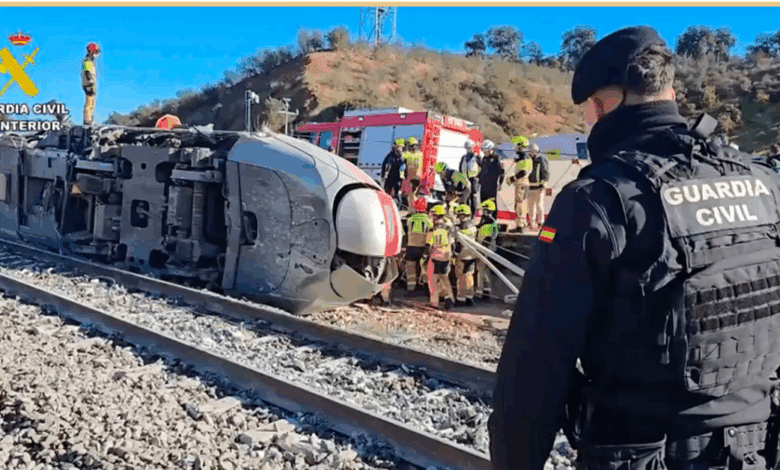
A major operation is underway in Adamuz to mitigate the aftermath of one of the deadliest train disasters in recent years. Dozens of rescuers, military personnel, and forensic experts are working at the scene. The death toll has surpassed forty, and the number of injured is over a hundred. National mourning has been declared across the country, but the tragedy is far from over: more people may still be trapped under the wreckage of the twisted carriages.
Efforts to remove the carriages are hampered not only by the difficult terrain—part of the train plunged down a four-meter embankment—but also by adverse weather. Meteorologists warn of approaching downpours that could turn the crash site into an impassable swamp. Meanwhile, more heavy machinery is being brought in: cranes, excavators, and specialized grabs and buckets. Every hour counts, as survivors or victims may still be trapped under the heaps of metal.
Challenging conditions
From early Tuesday morning, the roar of engines and shouted commands have filled the crash site. Military personnel and rescuers take turns clearing debris, stabilizing dangerously leaning carriages, and preparing sites for lifting heavy equipment. Special attention is focused on the sixth carriage of the Iryo train—it was the first to derail and, according to investigators, might hold the key to the cause of the disaster. For now, it remains untouched: forensic teams are documenting every detail, taking photographs, and collecting samples for analysis.
In the adjacent seventh and eighth carriages, work is progressing faster. Once inspection is complete, they are prepared for removal from the tracks. However, even a simple relocation requires surgical precision—a minor error could cause the structure to collapse or destroy crucial evidence. The entire operation is strictly supervised by police and transport accident investigators.
Search and Identification
While equipment operates on the rails, a different but equally intense effort is underway at the Córdoba morgue. Forensic experts are performing autopsies and identifying bodies. So far, only ten victims have been identified—all by their fingerprints. The rest await their turn, while relatives hope for any news. Authorities admit that the death toll may rise, as 43 people are still officially missing.
In the initial hours after the accident, three bodies were found in one of the carriages, but by evening that number had risen to four. The search continues around the clock despite exhaustion and unpredictable weather. Every fragment and personal belonging becomes part of a puzzle investigators are working to piece together.
Causes of the Disaster
While rescuers battle twisted metal and mud, experts are trying to determine what caused the tragedy. Preliminary reports suggest the accident may have been triggered by the rail track giving way, which led to one of the Iryo train cars derailing. Of particular concern is the fact that the train was new, had passed a technical inspection just days before the disaster, and was traveling within the legal speed limit.
Technical specialists, engineers, and representatives from the train manufacturer, Hitachi, have expressed their astonishment—such accidents are extremely rare, especially when the derailment starts at the rear of the train. All attention is now focused on a thorough analysis of the sixth car, which was the first to leave the tracks. Only after the investigation is complete will authorities permit its removal from the crash site.
Challenges and Risks
The recovery effort is complicated not just by the weather and difficult terrain, but by the condition of the train cars themselves. According to the head of the railway company Renfe, two of the cars were almost completely destroyed—nothing but a heap of mangled metal remains. The head of the Junta de Andalucía called them a ‘pile of iron’, emphasizing the scale of the destruction.
In these circumstances, every minute of delay can cost lives, and any mistake can destroy crucial evidence. Rescuers and investigators are working at their limits, not allowing themselves a second of rest. Many hours of hard and dangerous work still lie ahead, because until all carriages are retrieved and the victims identified, the tragedy in Adamuz will not be considered over.