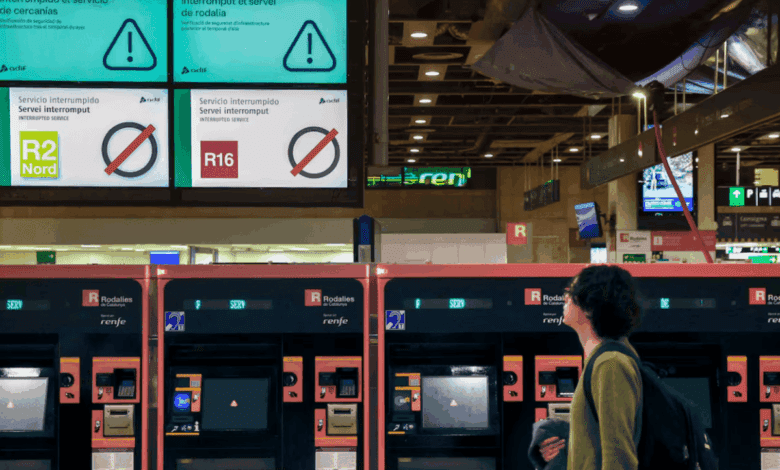
New disruptions in Barcelona’s rail system have once again raised concerns over the stability of the region’s transportation network. On Tuesday morning, two malfunctions occurred at the Adif Traffic Control Center, leading to a halt in Rodalies train service and increased delays. For thousands of passengers, this meant not only lost time but another wave of frustration with infrastructure quality.
The signaling systems responsible for safety and traffic coordination proved vulnerable to technical errors. Despite assurances that previous issues had been resolved, the situation repeated itself. As a result, even brief stoppages triggered a chain reaction of delays across the region.
Incident details
The first malfunction was recorded at 7:10 a.m. Rodalies trains came to a stop, and service was only restored five minutes later. The second incident happened around 8:00, with similar consequences—another forced pause in the schedule.
Renfe officials reported that the cause was a signaling system error. Automated safety protocols immediately halted train movements to prevent potential risks. Once the malfunction was fixed, trains resumed service, but the delays were already unavoidable.
Reaction and consequences
Questions about the reliability of the railway infrastructure have resurfaced on social media and at train stations. Passengers rushing to work or school found themselves at the mercy of the situation. Many recalled the recent disruptions in January, when similar issues led to a major transportation crisis and staff changes in the leadership of Adif and Renfe.
This time, despite the rapid resolution of the faults, the timetable was still heavily affected. Throughout the day, 11 railway sections had to switch to bus services to compensate for interruptions in train traffic.
Systemic issues
Experts note that recurring failures in the control center point to deeper issues in software and technical maintenance. Despite modernization efforts, the infrastructure remains vulnerable to outages that can paralyze routes on key lines.
Passengers and unions are demanding transparency and long-term solutions from railway operators. Questions about safety and reliability are becoming increasingly relevant as the region grows more dependent on commuter trains.
Context and comparisons
Such incidents are not uncommon for Europe’s railway systems. In recent years, disruptions at control centers have also been recorded in other countries, leading to widespread delays and cancellations. In Catalonia, the situation is exacerbated by high traffic density and complex logistics, making any disruptions especially impactful for local residents.
In January of this year, a similar problem at the same control center caused chaos on the railways and forced company management to take emergency measures. Despite promises of modernization and software upgrades, the new disruptions show that the road to stability will be long and challenging.