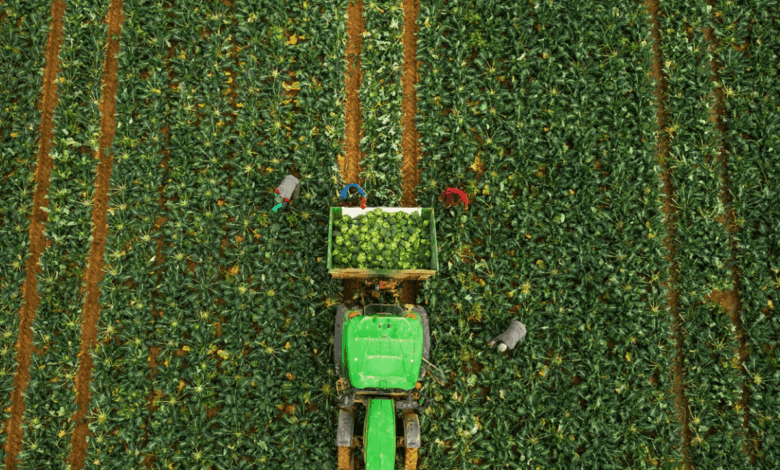
Aragon sees an intense battle for the support of farmers ahead of the elections, and the outcome could impact the region’s economy and the entire country. Issues such as trade agreements and the allocation of water resources have become focal points of tension among political parties. Here, agriculture is not just an industry but the foundation of life for tens of thousands of families, making any change particularly sensitive.
In recent weeks, political rivalry between Partido Popular (PP) and Vox has reached its peak. Both parties are vying for the backing of farmers, raising arguments over international agreements and internal sector woes. Amid farmers’ frustration with bureaucracy and competition from foreign producers, parties are looking for any way to strengthen their position, resorting to sharp statements and accusations.
Battle for the fields
In rural Aragon, voices of discontent are growing louder. Many farmers openly express disappointment with European Union policies, believing that new regulations and agreements only make their situation worse. The possible opening of the market to products from Mercosur countries is particularly alarming to local cooperatives, who fear it could drive down prices for Spanish goods and push small farms out of business.
Vox is actively tapping into these sentiments, building its campaign around criticism of the Mercosur agreement and accusing its rivals of betraying the interests of rural communities. According to polls, this party now leads in support among agricultural workers, even surpassing the traditionally strong PP in the region. In response, Partido Popular is tightening its rhetoric, striving not to lose the initiative and accusing Vox of populism and inconsistency.
The water issue
The debate over the possible diversion of the Ebro River’s water has become equally heated. For many locals, this is a symbol of their fight for survival, as water here is a strategic resource. Internal disagreements have arisen within Vox: some candidates support the diversion idea, while others strongly oppose it. The PP, for its part, is seizing on this internal conflict to attack its rivals and strengthen its standing among farmers concerned about the future of their farms.
Accusations and mutual recriminations are growing louder. Vox representatives claim that the PP is colluding with the socialists at the European level, sacrificing the interests of the agricultural sector for political deals. The PP, in turn, accuses Vox of lacking real solutions and attempting to exploit discontent to score points ahead of the elections.
Economy and employment
Agriculture and the agri-food industry in Aragón provide jobs for tens of thousands of people and make up a significant share of the region’s GDP. The proportion of workers is especially high in the provinces of Teruel and Huesca, where there are virtually no alternative sources of income. Any changes in trade regulations or water distribution could have serious social consequences, including rising unemployment and population outflow.
As the agricultural sector faces mounting competition and stricter sanitary regulations, political parties are forced to look for new ways to address these challenges. However, instead of constructive dialogue, mutual accusations and attempts to use the situation to strengthen electoral positions prevail so far.
Political outlook
Polls show that none of the parties can secure a majority without support from their rivals. This means that after the election, PP and Vox, despite their sharp confrontation, will be forced to seek compromises. This situation increases uncertainty and tension in the campaign, while farmers still await concrete solutions to help them survive under the new circumstances.
In recent years, similar conflicts over agricultural policy and the allocation of water resources have arisen in other regions of Spain as well. Valencia and Murcia have repeatedly witnessed mass protests against changes in water usage regulations and the import of agricultural products. In 2025, discussions about the Mercosur agreement sparked a wave of discontent among farmers across the country, while in Andalusia and Castilla-La Mancha, agricultural producers demanded a revision of European quotas. These events show that the problem is far from local and affects the interests of millions of Spaniards for whom agriculture remains the foundation of life and economic stability.