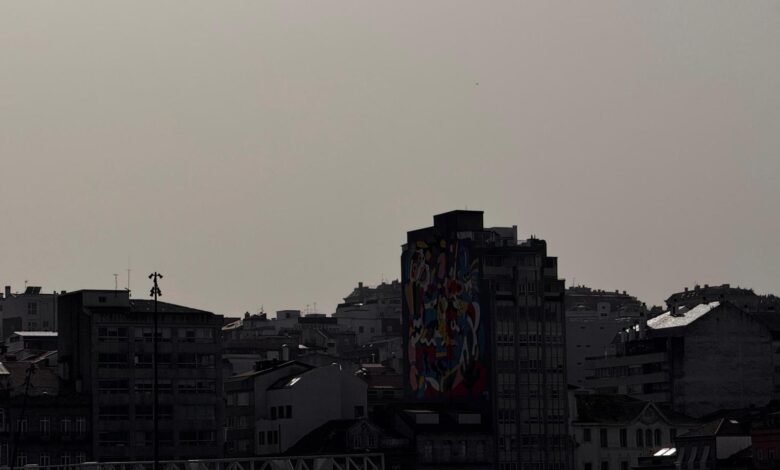
Restrictions have been reintroduced in Galicia due to deteriorating air quality, directly affecting the daily lives of local residents. Authorities have decided to activate a special protocol after meteorologists recorded the approach of air masses from the African continent. This means that in the coming days, there is expected to be a significant increase in fine particles in the atmosphere, which can cause health problems, especially for people with chronic conditions.
According to Ale Espanol, the highest risk is reported in the province of Ourense, as well as in the suburbs of Vigo and some municipalities of A Limia. Here, PM10 and PM2.5 particle concentrations may exceed normal levels. These substances can penetrate deep into the respiratory tract, causing irritation of the eyes, nose, and throat, and can also worsen the condition of people with asthma or heart disease. Authorities advise avoiding prolonged outdoor activity, especially during peak hours, and, if possible, keeping windows and doors closed.
Recommendations for residents
The region’s medical services recommend avoiding intense outdoor physical activity to reduce the risk of complications. For additional protection, experts advise wearing masks and sunglasses when going outside. These measures are especially important for the elderly, children, and anyone with chronic respiratory conditions. Authorities emphasize that even minor deteriorations in air quality can lead to unpleasant symptoms among sensitive groups.
According to the regional Ministry of the Environment, the situation may worsen in the coming hours. Forecasts indicate that air pollution levels in certain areas will reach a point where it is already recommended to limit any outdoor activities. If dust concentrations continue to rise, further restrictions and recommendations for the public may be introduced.
Monitoring and Information
Residents can monitor the situation using online services that provide up-to-date air quality data. The Meteogalicia website regularly updates information on particle concentrations and forecasts for the coming days. Authorities remind that when indicators reach the ‘poor’ or ‘very poor’ air quality level, health risks increase not only for vulnerable groups but for the general population as well.
The region has an alert system in place that enables rapid response to changing conditions. If necessary, local authorities are prepared to promptly implement additional measures to minimize health risks for residents. Special emphasis is placed on informing the population about potential risks and ways to protect themselves.
Recent cases and experience
In recent years, Galicia has already faced similar situations when African dust worsened air quality. For example, in the spring of 2024, restrictions were also implemented in the region, and the concentration of particles in the atmosphere exceeded permitted levels for several consecutive days. Many residents then reported feeling unwell, and medical services recorded an increase in complaints about respiratory irritation. Similar episodes have been observed in other parts of Spain, especially in the south of the country, where the impact of African air masses is felt most frequently. According to Ale Espanol, the authorities continue to improve the monitoring and alert systems to react promptly to such threats and reduce their impact on the population.