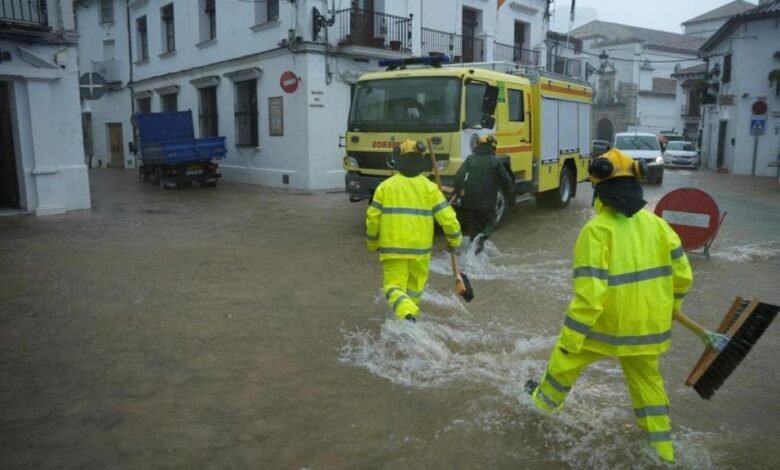
The situation in Andalusia remains critical even after the heavy rainfall has ceased. Overflowing rivers and reservoirs, along with soil that is already fully saturated, pose a continuing risk of new floods. For residents, this means staying constantly prepared for evacuation and facing restrictions on movement, since even the slightest rain could spark another wave of emergencies.
Evacuations and response measures
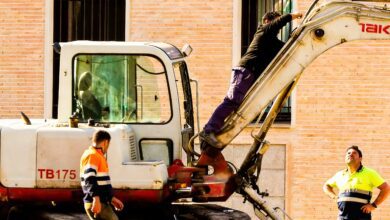
Nearly four thousand people have been forced to leave their homes in the provinces of Cádiz, Málaga, Jaén, and Sevilla. The cause: dangerous water levels in fourteen rivers and ten reservoirs that have reached a critical point. More than a thousand rescue workers and military personnel have been deployed in the affected areas, which has helped prevent casualties. However, material damage has already been reported, and one person suffered minor injuries from a rockfall inside a home in Ubrique (Cádiz).
Authorities are in no rush to restore normal life. Several schools remain closed, particularly in Almería, the capital of Jaén, and certain other areas. Regional officials emphasize that even minimal rainfall could trigger new flooding, since the waterways and soil simply cannot absorb any more water. The situation is being compared to a glass filled to the brim: just a single drop is enough to make it overflow.
Aftermath of the storm
Storm Leonardo brought record rainfall to Andalusia, especially in places like Grazalema, where more than 300 liters per square meter fell in a short time. Water seeped into electrical wiring and household appliances. Regional authorities acted step by step: first preparing, then implementing emergency measures, and now — cautious waiting. The president of the autonomous community, Juanma Moreno, urged everyone to remain vigilant despite the temporary lull.
On Wednesday, even after the heaviest rains had stopped, the situation remained tense. Water continued to flow into rivers and reservoirs, not only due to rainfall but also runoff from fields and mountains. The situation was especially difficult in Cádiz — in the Campo de Gibraltar area and Grazalema — as well as rural areas of Jaén, Seville, and in Ronda (Málaga).
Risks and monitoring
Military and rescue teams continue to monitor water levels around the clock. Emergency Military Unit divisions and over a thousand civil protection staff are working in the region. Thanks to their efforts, tragedies were avoided despite the historic rainfall. However, authorities emphasize that the danger has not passed and it’s too soon to relax.
In some areas, such as Almería, Jaén, and certain locations in other provinces, schools and kindergartens remain closed. Where roads have been damaged or there is a risk of further flooding, educational institutions are not opening. Authorities urge residents not to leave their homes unless necessary and to closely follow updates from emergency services.
Geography of the threat
Rivers continue to rise even without new rainfall. Water is coming from tributaries, fields, and mountains where the soil can no longer absorb moisture. The situation is particularly challenging in the upper reaches of the Genil River in Granada, in Sierra de Cazorla and southern Jaén province, as well as in the lower Genil and the south of Seville.
In Granada, in the Alto Genil area, where the watershed reacts quickly to rainfall, floods have affected agricultural land, led to road closures, and damaged homes in towns such as Dúdar, Pinos Genil, Huétor-Tájar, Villanueva de Mesías, Láchar, Valderrubio, and Trasmulas. Farms and fish hatcheries have also suffered losses in Río Frío, Benalúa de las Villas, and Quéntar.
Situation in other provinces
In Jaén, in the Sierra de Cazorla, authorities are closely monitoring water levels in the main channel of the Guadalquivir River. In Sierra de Segura, heavy rainfall has affected less regulated basins such as Puerta de Segura, Puente Génave, and Beas de Segura. In the Los Puentes residential district of Jaén, where around a thousand homes are located, sudden water surges have been recorded, but serious consequences have been avoided.
In Córdoba, the Guadalquivir River has reached an orange risk level, and in some areas, red, although so far without significant consequences. However, tributaries like the Anzur are already causing access issues to the municipalities of Santaella and Cabra. Special attention is being paid to Palma del Río, where the Genil and Guadalquivir rivers merge, both with rising water levels.
In Seville, the most critical situation has developed in El Palmar de Troya, where two unregulated streams and the Salado River pose a flood threat. The Corbones River has risen sharply, causing problems in Puebla de Cazalla. The local reservoir has been closed to prevent increasing the downstream water flow.
Constant monitoring
Authorities continue to monitor the situation around the clock, coordinating with civil protection and emergency services. Residents are strongly advised to follow rescue instructions and avoid traveling to dangerous areas. Even minor rainfall could trigger new emergencies, so it is too soon to relax.
Looking back at recent events, it is worth noting that such weather disasters are not new for Andalusia. In recent years, the region has already faced large-scale floods when heavy rainfall led to hundreds of road closures, school cancelations, and thousands of people being forced to leave their homes. In one of our previous reports, we detailed how storm Leonardo disrupted daily life in Andalusia, triggering mass evacuations and blocking key transportation routes. You can find out more about how events unfolded during those days in the article Hundreds of roads blocked by storm Leonardo.