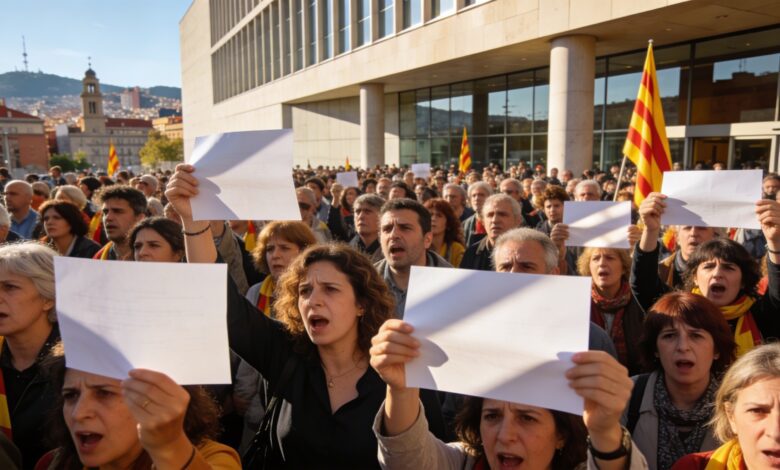
A heated debate has erupted in Catalonia over teachers’ working conditions, potentially shaping the future of education in the region. Nearly all staff at public schools have voiced disagreement with the new agreement reached between the Department of Education and the CC OO and UGT unions. The decision came as a surprise to many, as it involves significant changes to salaries and extra payments affecting tens of thousands of education professionals.
According to data provided by Ustec, CGT, and Intersindical, the survey covered around 83,000 teachers, nearly half of whom—42,965 people—took part. Of those, 94.9% rejected the proposed deal, with only 5.1% in favor. Such a high level of opposition among teachers is rare and highlights the depth of dissatisfaction within the professional community.
Key points of the agreement
The document signed by the Catalonia Department of Education and unions CC OO and UGT calls for a phased 30% increase in the regional supplement over four years. Currently, this bonus is about 700 euros per month. The agreement also introduces new payments: 50 euros for each night a teacher spends on school trips, along with a gradual reduction in the number of students in classes at schools with high and maximum complexity. Additionally, more resources are to be allocated to inclusive education.
The total budget of the agreement is estimated at 2 billion euros over four years. Until now, the Catalan authorities emphasized that any improvements in salaries and working conditions were only possible with the approval of the regional budget. However, as El Pais notes, the government has changed its position without specifying the sources of funding and limited itself to promising to fulfill all the terms of the agreement.
Reaction of teachers and unions
The main unions representing most education workers — Ustec, CGT, and Intersindical — did not participate in signing the document and criticized the terms of the agreement. In their view, the proposed measures do not reflect teachers’ real needs and fail to address key demands raised in previous negotiations. As a result, they organized a large-scale survey to find out educators’ opinions on the new conditions.
The survey results were unequivocal: the vast majority of teachers rejected the agreement, considering it insufficient and unfair. According to El Pais, many educators fear that implementing the document will lead to increased workload and will not resolve the main problems of the system. At the same time, according to russpain.com, the situation could lead to new protests and strikes if the authorities do not reconsider the terms of the agreement.
Consequences for the education system
The current situation has already sparked broad debate within the professional community and among parents. Many are concerned that widespread teacher dissatisfaction could affect the quality of education and the stability of the academic process. With most educators not supporting the authorities’ decisions, the risk of new protest waves and disruptions in schools increases.
There have previously been disputes in the region regarding increased compensation and working conditions for teachers. For example, details of earlier disagreements between unions and the Catalan government show that reaching a compromise on key issues is not easy. The situation has escalated again, and what happens next will depend on how the authorities respond to the teachers’ widespread dissent.
Context and similar cases
In recent years, conflicts between teachers and regional authorities over pay and working conditions have repeatedly arisen in Spain. In 2024, a similar situation unfolded in Madrid, where educators also protested proposed changes, demanding greater transparency and safeguards. In Andalucía and Valencia, there were discussions around reducing workload and increasing funding for inclusive education. These events highlight that working conditions for teachers remain an urgent issue nationwide and require a comprehensive approach from authorities.