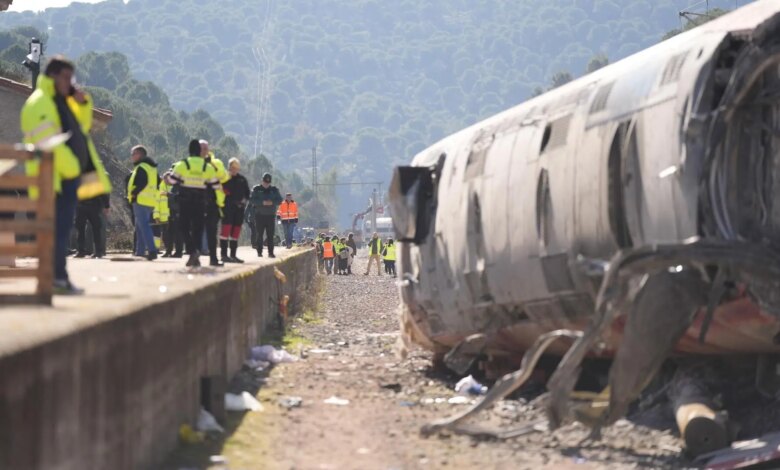
Sunday evening at the Madrid-Puerta de Atocha station turned into a nightmare for railway workers and passengers. After an Alvia train collided with an Iryo train that had derailed near Adamuz, contact with the Alvia train driver was suddenly lost. Control center dispatchers tried calling him twice, but received no answer. It was later revealed that the driver died at the moment of the accident.
In this critical moment, it was the train inspector—a female employee aboard the Alvia—who became the sole link between the victims and the control center. Despite a head injury and bleeding, she took responsibility to report the incident. Her anxious voice was heard over the radio: “I have blood on my head, I’ll try to speak to the driver.”
The first minutes after the crash
While dispatchers were unsuccessfully trying to reach the driver, a technical specialist contacted the inspector via internal communication. He asked her to check on the driver’s condition and try to hand him the receiver. Her reply was calm but clearly tense: “I’ve also been hit on the head. Blood is flowing. I’m the inspector, I’m injured too. I don’t know if I can get to the cab. I’ll try to speak to the driver.”
At that moment, another call came in—this time from the Iryo train driver. He reported a ‘brush,’ unaware that a collision had occurred. The whole situation was unfolding rapidly, and none of the participants grasped the scale of the disaster.
Control center response
Minister of Transport and Mobility Óscar Puente confirmed that the control center at Atocha made attempts to contact the Alvia train driver. After the Iryo train driver reported an emergency, dispatchers immediately tried to reach the second driver. Receiving no response, they turned to the train supervisor to find out what was happening onboard.
Puente stressed that the collision occurred just nine seconds after the Iryo train derailed. The driver did not realize there had been a collision and was unable to provide dispatchers with an accurate picture of the situation. Only after speaking with the train supervisor did the control center grasp the true severity of the incident.
Chaos and uncertainty
In the first minutes after the accident, the railway was gripped by chaos and uncertainty. No one knew how many were injured, the extent of the damage, or what to do next. Despite her own injuries, the train supervisor attempted to reach the driver’s cab to check his condition. Her determination and selflessness proved crucial in those critical minutes.
Meanwhile, dispatchers continued to coordinate rescue operations and tried to gather as much information as possible about the incident. Every call, every message could be vital in saving lives.
The aftermath of the tragedy
The Adamuz train accident has once again raised serious concerns about the safety of rail transport in Spain. Questions about communication systems, response speed, and staff readiness are now being discussed at the highest levels. The story of the route supervisor, who, despite being injured, was the first to report the disaster, has become a symbol of resilience and professionalism.
Authorities have promised a thorough investigation into all the circumstances of the tragedy. Yet for many witnesses and those involved, those moments will remain unforgettable — a clear example of how one determined woman was able to change the course of events at a critical time.
Earlier, we reported on the first minutes following the Adamuz crash. At that time, unique audio recordings were released documenting the communications between railway staff and dispatchers. The aftermath was marked by chaos and uncertainty as everyone involved tried to comprehend what had happened. For more details, see our feature “The First Minutes After the Crash: Audio Recordings From the Adamuz Train Accident Scene”.