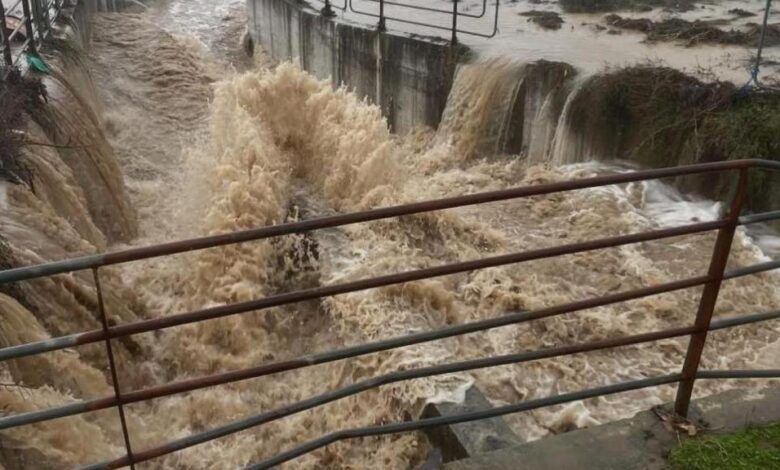
Andalusia has launched an unprecedented flood protection program that has already transformed everyday life in dozens of cities. Regional authorities have allocated record amounts to restore and clean rivers, aiming to minimize damage from natural disasters. For residents, this means not only greater safety, but also new rules for living near bodies of water.
Emergency investments
In recent years, spending on the prevention and elimination of flood consequences has increased fivefold compared to previous periods. Just recently, the total amount exceeded 125 million euros. By comparison, funding for these purposes was several times lower only a few years ago. The increase in investment became especially noticeable after a series of devastating downpours hit the provinces of Málaga, Huelva, and Almería.
Part of the funds went to emergency repairs and restoration of riverbeds damaged by heavy rains in 2014 and 2015. The impact of the natural disasters at that time forced authorities to rethink their approach to water management. As a result, nearly 18 million euros were spent just on eliminating the consequences of those events.
Water and risks
The past few months in Andalusia have been especially rainy. The region’s reservoirs are now almost 60% full—the highest levels in recent years. Due to heavy rainfall, floodgates had to be opened at dams in Málaga, Cádiz, and Huelva to prevent overflowing. In some areas, such as Campo de Gibraltar, residents were even evacuated due to the threat of flooding.
In 2026, the autonomous community’s budget includes a record allocation for river maintenance and restoration—54 million euros. This is the largest investment in the region’s history aimed at preventing new disasters and protecting citizens’ property.
Work by Province
From 2023 to 2025, specialists from the Ministry of Agriculture, Fisheries, Water Resources, and Rural Development carried out large-scale riverbed restoration and cleaning projects. The main goal is to reduce flood risks and protect the population, as well as to return rivers to their natural state and restore ecosystems.
The list of works included clearing blockages, restoring old hydraulic structures, cleaning springs and water sources, as well as planting trees and reinforcing riverbanks. Special attention was paid to areas where rivers pass through populated areas or cross protected natural zones.
In total, the works covered more than 300 kilometers of riverbeds across 139 municipalities. In the province of Málaga, large-scale efforts took place in the Guadalhorce, Fahala, and Pereilas river basins, as well as in the valleys of the Vélez, Algarrobo, Chillar, and Torrox rivers.
Special areas
In Huelva, the main focus was on restoring natural complexes around the Doñana National Park and on water management works in the El Chorrito del Valle stream valley. In Cádiz, specialists worked in the areas of the Los Hurones, Zahara – El Gastor, Guadalacín, Arcos, and Barbate reservoirs, as well as on the dams of the Barrida stream.
In Granada, the Molvizar streambed was restored and reforestation projects were carried out in the Béznar reservoir basin. In Almería, protection of semi-arid ecosystems was reinforced and restoration works took place on the Andarax River to improve resilience to climate change.
Challenging situations
In recent weeks, residents of some areas in Jaén and Jerez de la Frontera (Cádiz) have faced forced evacuations due to rising water levels in the Guadalete and Guadalquivir rivers. In other provinces—Seville, Córdoba, and Jaén—the main river maintenance works are carried out by the Guadalquivir Hydrographic Confederation. Regional authorities there participated only in separate projects, such as clearing the Molinillo and Cuerno streams.
Large-scale river cleaning and restoration efforts are ongoing, and the results are already visible in dozens of towns. For many residents, this has become an unexpected but long-awaited change to the familiar landscape.