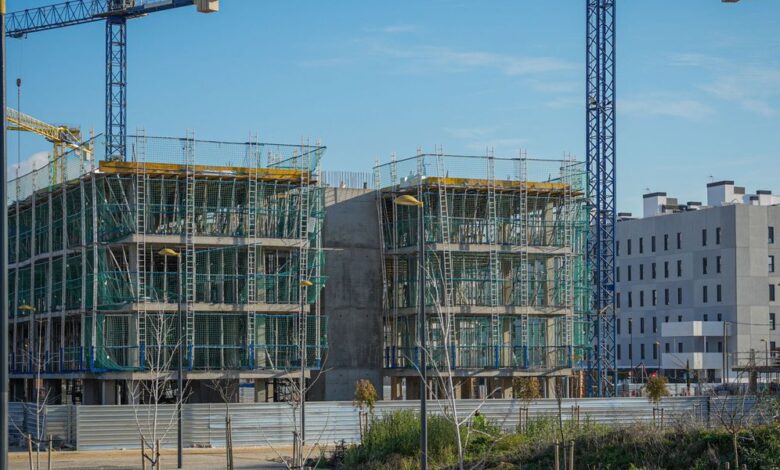
The authorities of Andalusia have announced the launch of a large-scale program that will provide for the construction of nearly 41,000 new apartments on land owned by municipalities. This move is a response to the acute housing shortage in the region, which has only intensified in recent years.
At the beginning of the year, a special decree was adopted allowing local administrations to revise the designation of several plots of land. Now, not only commercial properties or offices, but also residential buildings can be constructed on these sites. As a result, more than eight thousand apartments will appear in areas previously earmarked for other purposes, including former industrial zones and even buildings previously used by state agencies.
The total area allocated for development exceeds one and a half million square meters. The new housing will be distributed among 659 separate zones in the region’s largest cities. The program will primarily affect localities with a population of more than 100,000 residents, including all eight provincial capitals, as well as cities such as Jerez, Algeciras, Cadiz, Marbella, Dos Hermanas, and Roquetas de Mar.
The largest number of new apartments is planned for Málaga—over 8,500 units. Next are Sevilla and Dos Hermanas, with 7,500 and 6,800 apartments respectively. Interestingly, the province of Sevilla has the most available land plots for construction, even though the housing shortage is felt more acutely in Málaga itself. In Marbella, despite high demand, only enough land has been allocated for 172 new apartments.
The regional authorities are focusing on partnering with private developers to speed up the process and make housing more affordable for residents. At the same time, it is emphasized that the government will take on projects that are not of interest to private businesses. Architects and market experts note that solving the housing issue requires not only more construction, but also rethinking planning approaches—such as increasing building height and reducing apartment sizes to better meet the modern needs of families.
The new program was presented with the participation of representatives from construction companies and professional associations. Regional authorities expect the project to cover about a quarter of the current housing deficit, according to official statistics. However, not everyone in the region supports the initiative: some public organizations believe that the new laws encourage construction more than they address the issue of housing affordability.