In 2025, Spanish researchers presented the results of a large-scale analysis shedding light on the possible influence of the city of Aranjuez on the urban planning concept of Washington. The work by specialists from the University of Almería and the Polytechnic University of Madrid revealed a number of striking similarities in the layouts of the two cities, which may change perceptions about the origins of the architectural ideas behind the American capital.
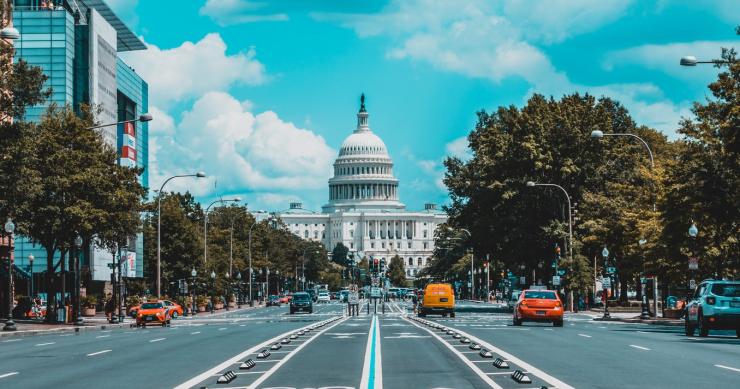
During the study, scientists compared historical maps and plans, paying particular attention to street structure, the placement of key buildings, and the general organization of space. It was found that both capitals have 12 radial avenues and a distinctive trapezoidal street grid. In addition, central buildings in both cities are located according to a similar principle: in Aranjuez, this is the Royal Palace and the Church of San Antonio, and in Washington, the Capitol and the White House.
The research began after one of the project participants, having visited Washington, noticed a resemblance to Aranjuez. This observation became the starting point for a more in-depth analysis that lasted over a year. As a result, the study identified not only common features in the city layouts, but also possible historical links between the architects of the two cities.
Researchers paid special attention to Pierre L’Enfant, who was responsible for designing Washington. According to scholars, L’Enfant may have been familiar with the plans of Aranjuez, created in 1771, and used them as a source of inspiration. Supporting this theory is the fact that L’Enfant and his father were in Paris at the same time that the Spanish architect Manuel S. Carmona was working there. It is also possible that Thomas Jefferson, who visited Paris in 1783, became acquainted with Spanish urban planning solutions.
Among the most striking parallels between the two cities, researchers highlight the presence of two large rectangular squares, similar in both form and function, as well as the resemblance between the Plaza de las Doce Calles in Aranjuez and the system of radial avenues extending from the Capitol in Washington. Additionally, there is an analogy between the triple alleyway beam in the Spanish Parterre Garden and the three main avenues of the American capital.
The historical context also plays an important role. In the late 18th century, Spain was actively involved in international politics and supported the United States in the fight for independence. In 1779, a treaty was signed between Spain and France providing for assistance to the American colonies. This may have promoted the exchange of architectural and urban planning ideas between the countries.
The authors of the study emphasize that the influence of French Versailles on Washington has long been well known, but the role of Aranjuez in shaping the look of the American capital has remained in the shadows for a long time. The new findings offer a fresh perspective on the history of architectural borrowing and highlight the significance of Spanish heritage in global urban planning.
The discovery by Spanish researchers not only broadens our understanding of the past, but also underscores the importance of cultural ties between countries. Aranjuez, renowned for its gardens and palaces, can now be viewed as one of the sources of inspiration behind the creation of one of the world’s most recognizable capitals.