Spanish society has found itself in the spotlight after police carried out one of the largest anti-drug operations in recent years. A total of 105 people were arrested, and the scale of the seized assets and drugs surprised even seasoned specialists. For many residents, this news has become an alarming sign: criminal networks are not only maintaining their influence but also resorting to increasingly sophisticated methods to evade the law. Questions about security, corruption, and the international ties of criminals have once again come to the forefront.
A network without borders
The operation, known as ‘Sombra Negra’, spanned several regions, from Andalusia to the Canary Islands. The organizers transported cocaine on an industrial scale, using high-speed boats and meticulously planned logistics. According to police, up to 52 tons of cocaine passed through the criminals’ hands in the most recent period alone. To cover their tracks, the group relied not only on modern technology, but also on large sums of cash: to silence the family of a deceased victim, they paid out 12 million euros.
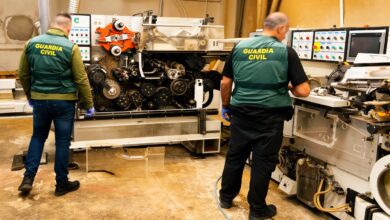
During the raids, authorities seized 10.4 tons of cocaine, 70 vehicles, 30 boats, six real estate properties, as well as weapons, large amounts of cash, and cutting-edge electronic devices. All of this points to a highly organized and technologically advanced criminal group. The scale of their routes is also striking: drug couriers set off from the banks of the Guadalquivir River, Cádiz, Huelva, Almería, the Canary Islands, as well as the coasts of Morocco and Portugal, transferring cargo onto large vessels in the Atlantic to deliver it to Spain.
Technology and Secrecy
To coordinate their activities, the criminals used encrypted communication channels, satellite terminals, and mobile phones that are nearly impossible to track. They communicated in a special coded language, and most operations took place at night to minimize the risk of detection. This level of secrecy and technological sophistication was previously seen only among international criminal syndicates.
Among the assets seized were not only vehicles and real estate, but also two modern hexacopters, more than 150 mobile phones, bank accounts, and electronic devices worth about 2.5 million euros in total. All of this shows that the criminal network spared no expense to ensure its own security and efficiency.
International Cooperation
Of particular note is the international scale of the operation. Police and special services from various countries participated, including France, Portugal, Colombia, and Cabo Verde. Agencies involved included NCA, DEA, DGSN, EUROPOL, and MAOC-N. Thanks to coordinated efforts, authorities not only apprehended key suspects but also uncovered new drug trafficking routes that had previously escaped law enforcement attention.
The operation resulted in the seizure of not only drugs but also significant assets: 70 vehicles, 30 boats, six properties, three firearms, more than €800,000 in cash, as well as numerous electronic devices and bank accounts. The scale of the seized property and the number of arrests highlight just how deeply the criminal network had infiltrated the economy and daily life in certain regions.
Challenges for society
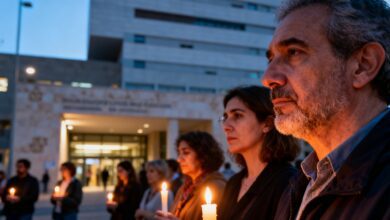
This large-scale operation dealt a blow to the drug trade but also sparked serious reflection on the state of security in the country. For many residents of Andalusia and the Canary Islands, the story served as a reminder that the fight against organized crime demands constant vigilance and new strategies. Questions remain about how such networks managed to operate with near impunity for so long.
Scandalous details, such as the attempt to buy the silence of the victim’s family for 12 million euros, only fuel public outrage. At the same time, the success of Operation ‘Sombra Negra’ demonstrates that international cooperation and modern technologies can deliver serious blows to organized crime. However, experts caution that it is too soon to relax: criminal networks adapt quickly to new conditions and are constantly seeking new ways to continue their operations.