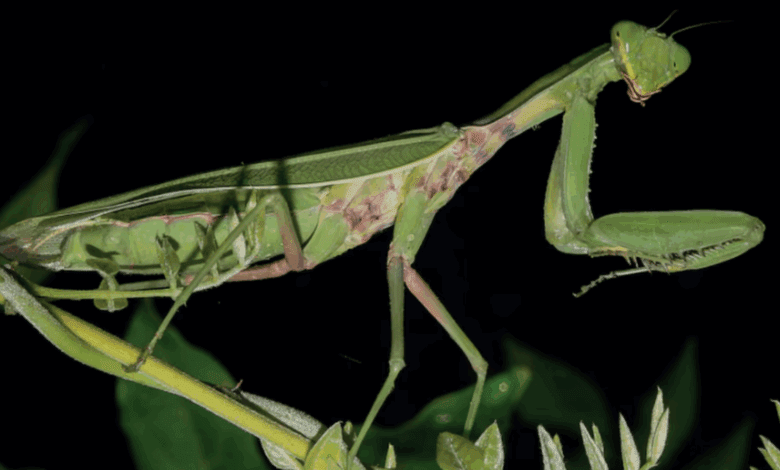
In recent years, Spain and other European countries have witnessed a worrying trend: Asian giant mantises are rapidly spreading into new areas. This development is already affecting everyday life in cities and rural regions, while also raising concerns among conservation experts. The reason is that these insects can quickly displace native species and threaten rare animals, potentially leading to noticeable changes in ecosystems.
According to RUSSPAIN.COM, the arrival of Hierodula tenuidentata and Hierodula patellifera is linked to increased international trade and the movement of goods. Unlike other exotic species, Asian mantises rarely enter Europe as household pets. Their spread is fueled not only by transportation flows but also by climate change: mild winters and the urban heat island effect enable these insects to survive in places where they used to be absent.
Expansion of their range
Research conducted by Italian and Hungarian scientists shows that Hierodula tenuidentata was first spotted outside its usual range in the early 21st century. It was initially detected in Crimea and Greece, then in Italy, the Balkans, France, Austria, and Spain. In a short period, these mantises have occupied a significant part of the Mediterranean and begun to penetrate deeper into the continent.
The main threat to local wildlife is the high fertility of Asian species. A single female can lay twice as many eggs as the European Mantis religiosa. Moreover, young individuals show almost no signs of cannibalism, which allows them to increase their population rapidly. As a result, local mantises are at a disadvantage and are gradually losing territory to the newcomers.
Impact on the ecosystem
A particular concern is that Asian mantises prey not only on insects, but also on small vertebrates, including rare lizards and frogs protected by European law. In Spain, there have already been recorded attacks on such animals, which could lead to a decline in their populations. The new species have almost no natural enemies—only some birds, wasps, and house cats are capable of limiting their numbers.
Scientists point out another problem: male native mantises often fall victim to female Asian species due to the so-called ‘fatal attraction.’ This lowers the chances of reproduction for European species and accelerates their displacement. In cities and suburbs, the new mantises easily find shelter—on balconies, in gardens, parks, and even on playgrounds.
Expert recommendations
Experts believe the situation requires urgent action. It is necessary not only to monitor the spread of Asian mantises, but also to conduct special inspections in areas where rare animals and key pollinators live. It is important to inform the public about the risks and prevent the intentional relocation of these insects. Removal of egg cases and adults should be carried out only under professional supervision to avoid harming other species.
If action is not taken, Asian mantises could seriously harm Spain’s biodiversity and that of other European countries. Their ability to adapt and reproduce rapidly makes them among the most dangerous invasive species in recent years.
In recent years, Europe has faced an influx of exotic animals and insects that are changing the natural landscape. For instance, the American red crayfish and the Florida turtle have already become a problem for local ecosystems. Such cases show that new species can quickly occupy open niches and displace native inhabitants. Spain is currently discussing measures to control the spread of these animals in order to preserve the country’s unique natural diversity.