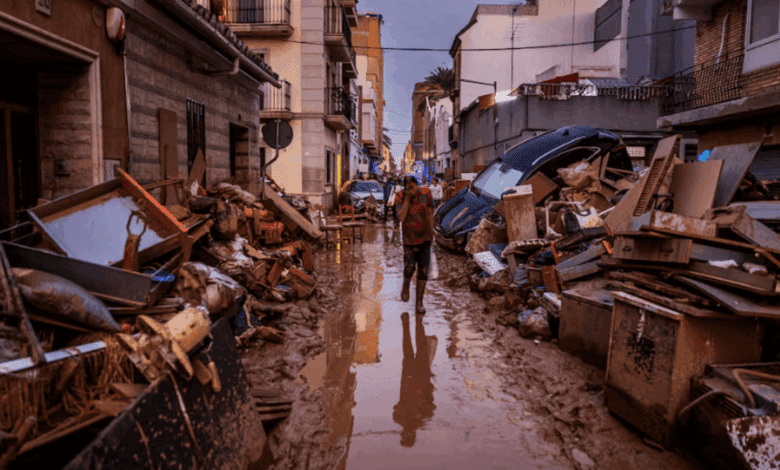
The Spanish State Meteorological Agency (Aemet) had warned Valencia’s emergency services in advance about possible flooding caused by the powerful cyclone that claimed 229 lives on October 29, 2024. Investigators have obtained recordings of phone conversations between representatives of Aemet and the regional emergency response center, which have now become key evidence in the ongoing probe into the tragedy.
How the disaster unfolded on the day of the catastrophe
On the morning of October 29, an employee of the emergency coordination center contacted a colleague at Aemet to clarify the forecast for the coming hours and days. At that point, an operations headquarters had already been established in Valencia, and coastal areas were under warnings for heavy rain. The meteorologist reported that the brunt of the storm was expected not in the city itself, but in outlying suburbs and inland areas such as Náquera and Serra. According to her, no extreme rainfall was forecast for the capital, though significant water accumulation was expected in the northern and interior regions.
During the conversation, they discussed the likelihood that the rains could cause a sudden rise in river levels. The meteorologist noted that models were predicting unusually high rainfall over a 12-hour period, which could result in flooding, especially in the northern areas. She also warned that water coming from the interior could reach the coast as a powerful wave, with consequences that were difficult to predict.
Investigators refute claims of ‘downplaying’ the threat
These audio recordings have become a key piece of evidence in the investigation led by a judge in Catarroja. For a year after the tragedy, acting head of the Valencian government Carlos Mazón and his supporters claimed that regional authorities had not received timely warnings from national agencies, including Aemet and the hydrological service. However, new evidence proves otherwise: information about the risk had arrived in advance, and on the day of the disaster, the highest alert level was declared due to heavy rains.
The judge recognized as credible the testimony of meteorological and hydrological service leaders, who stated they had warned of possible danger several days before the tragedy. On the day of the incident, Aemet officially declared a red alert at 7:36 a.m., the maximum level on the warning scale.
Questions about the actions of regional authorities
The release of the audio recordings shattered the narrative that the tragedy was caused by a lack of information. The investigation is now focused on how regional authorities responded to the warnings and why such large-scale consequences could not be prevented. There are also questions about whether all possible measures were taken to protect the population, given the forecasts and the level of threat.
The investigation is ongoing, and new details of phone conversations between meteorologists and emergency services may play a crucial role in determining responsibility for the tragedy that claimed the lives of hundreds of Valencia residents.