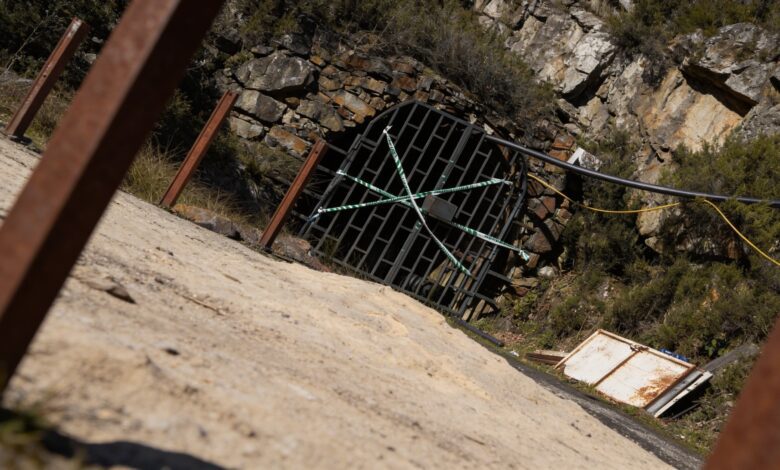
The results of a comprehensive audit of Asturias’ mining authority have sounded an alarm for the entire region’s industry. After the tragedy in Cerredo in March 2025, where five miners lost their lives, it became evident that the safety and oversight systems were ineffective, and administrative errors led to fatal consequences. For Spain, this means not only rethinking how hazardous industries are supervised, but also the potential for personnel changes in key positions.
As El Pais notes, the regional safety commission has endorsed the urgent need for changes in the operations of the mining authority. The audit, ordered by the head of the autonomous community, Adrián Barbón, uncovered a range of violations—from outdated regulations and ineffective inspections to a lack of proper response to complaints and incidents. The 317-page report details not only the circumstances of the accident but also systemic issues such as a shortage of specialists, paperwork failures, outdated IT systems, and a formalistic approach to complaint investigations.
Gaps in oversight
Auditors paid special attention to how inspections at the mines were conducted. According to their findings, inspections were often pre-arranged with company management, allowing violations to be concealed. In addition, the transfer of mining rights between companies, as occurred between Combayl and Blue Solving, was marked by ambiguity and a lack of transparency. In both cases, the same businessman—Chus Mirantes—was behind the companies and is currently under investigation.
The authorities in Asturias have already announced the launch of the Regenera plan, which includes restoring a separate mine safety service that was abolished in 2019. They plan to reinstate this department within two months, and in the coming weeks — to prepare new guidelines for tighter oversight of mining rights transfers and the use of additional exploration project permits (PIC). According to El Pais, these projects previously made it possible to continue coal mining at sites slated for closure.
Accountability and investigations
Regional president Adrian Barbón has promised that the authorities will not limit themselves to audit recommendations. Internal investigations have already begun into several cases: the contract between Combayl and Blue Solving, which allowed coal extraction without a permit; changes to sanctions after the 2022 accident; and instances where identified violations were not fully pursued. Barbón emphasized that if there are even the slightest signs of criminal activity, the case files will be sent to the prosecutor’s office, but that the distinction between criminal liability and administrative negligence will always be maintained.
Additional measures include digitizing the cadastre, publishing annual inspection reports, and carrying out unannounced inspections at mines. This aims to eliminate the practice of prior notifications and increase the transparency of the service’s operations.
Opposition and union response
Opposition parties believe that the resignation of former industry minister Belarmina Díaz is not enough. According to representatives of Partido Popular and Foro, Enrique Fernández (now president of Hunosa) and Nieves Roqueñi (head of the Port of Gijón), both former industry chiefs, should also be held accountable. Opposition leaders argue that the post-tragedy reshuffling of officials looks more like a reward than a punishment.
Trade unions are also demanding concrete action. Representatives of CC OO and SOMA-FITG-UGT say the violations uncovered must lead to real changes, not just be left on paper. They plan to take part in the legal proceedings over the deaths of five miners and to monitor the progress of the investigation. According to russpain.com, union demands have become increasingly tough amid a rise in accidents in high-risk sectors.
Context and recommendations
The inspection report contains 11 specific proposals: from updating regulations and strengthening oversight of license transfers to introducing new inspection standards and digitizing data. Authorities promise to implement these measures as soon as possible, but the opposition and unions demand not only reforms but also personal accountability for executives found responsible for violations.
In Spain, the issue of accountability for industrial accidents remains among the most pressing. Recently in Santander, the investigation into the deaths of students on the footbridge widened the circle of suspects, suggesting that the approach to investigating such tragedies is gradually changing. Read more about the latest developments in this case in the article about new suspects in the footbridge tragedy case.
In recent years, Spain has seen a growing number of industrial accidents leading to large-scale inspections and personnel changes. After the 2013 mining catastrophe in León, safety requirements were tightened; however, the approach to inspections often remained formal. In 2024, an explosion at a chemical plant in Galicia also led to high-profile resignations and a revision of standards. These incidents underscore that only systemic reforms and greater transparency can bring about real change.