The awarding of the Madrid International Medal to the United States of America has sparked a heated political debate that extends beyond the capital to all of Spain. The decision, made against the backdrop of the 250th anniversary of US independence, triggered a wave of criticism from the opposition and raised questions about the country’s foreign policy priorities. For Spaniards, this is more than a symbolic gesture — it concerns how the country’s image is shaped on the international stage and what consequences such actions might have for relations with key partners.
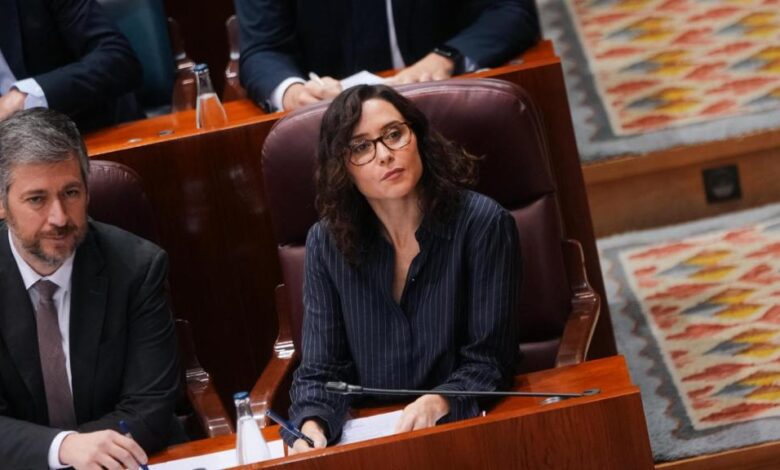
The President of the Community of Madrid, Isabel Díaz Ayuso, delivered a strong statement defending the award to the US, stressing that it is a recognition of the entire nation, not of any specific government or political leader. She rejected accusations of supporting Donald Trump, stating that the medal is intended for a country that unites people with different viewpoints and political preferences. According to her, such awards should not become tools for political disputes but should serve to strengthen ties between nations.
However, the opposition did not agree with this stance. Representatives of left-wing parties accused Ayuso of allegedly siding with the controversial decisions of the US administration and ignoring the region’s internal problems. Specifically, Manuela Bergerot from Más Madrid pointed out the difficulties faced by the healthcare system and linked the awarding of the medal to an attempt to divert attention from pressing local issues. The Socialists also joined in, criticizing the Madrid leadership for its moral ambiguity and demanding explanations as to whom Ayuso actually considers a role model on the world stage.
Political clashes
Tempers flared during the debate in the Madrid Assembly. Ayuso accused Pedro Sánchez’s government of isolating Spain on the international stage and claimed that the country’s foreign policy had been reduced to supporting questionable allies. She emphasized that it is wrong to sever ties with entire nations over temporary political disagreements and reminded that Spaniards should not feel obligated to apologize for the actions of individual politicians.
In response, the opposition tried to link the decision to award the United States with domestic reforms, particularly the so-called ‘Ley Quirón’ project, which restricts cooperation between public and private healthcare institutions. According to critics, Ayuso is trying to use foreign policy initiatives to distract attention from changes that could affect the daily lives of many regional residents.
In this context, it is worth recalling how a similarly heated debate recently erupted at an award ceremony: a well-known writer publicly accused Ayuso of failures in social policy, prompting a strong public reaction. You can read more about this case in the article about the writer’s sensational speech at the awards ceremony.
Cultural symbols and new perspectives
Unexpectedly, the issue of cultural symbols entered the political debate. Representatives of left-wing parties proposed awarding the medal not to the United States, but to the popular performer Bad Bunny, who, in their view, has become a symbol of the fight against extremism and intolerance. In recent weeks, socialists have actively used the artist’s image and quotes in parliamentary debates, presenting him as a contrast to the ideas associated with Trumpism and right-wing movements.
This turn of events has only reinforced the sense that the struggle over symbols and cultural reference points is becoming an integral part of Spain’s political life. Ayuso, for her part, insisted on the need to separate relations between countries from current political circumstances, emphasizing that long-term ties matter more than short-term disagreements.
The question of who should receive state honors and for what has once again taken center stage in public debate. For many Madrid residents and citizens across the country, this controversy reflects deeper processes—the search for new benchmarks and a rethinking of Spain’s place in the world.
Context and consequences
In recent years, the awarding of state honors has increasingly sparked heated debates. There have already been situations where the choice of recipients provoked public dissatisfaction or became a tool in political struggles. One need only recall recent disputes over the granting of awards in culture and science, when government decisions were criticized for political bias. Such conflicts highlight how important issues of symbols, recognition, and the international image of the country are for Spanish society.