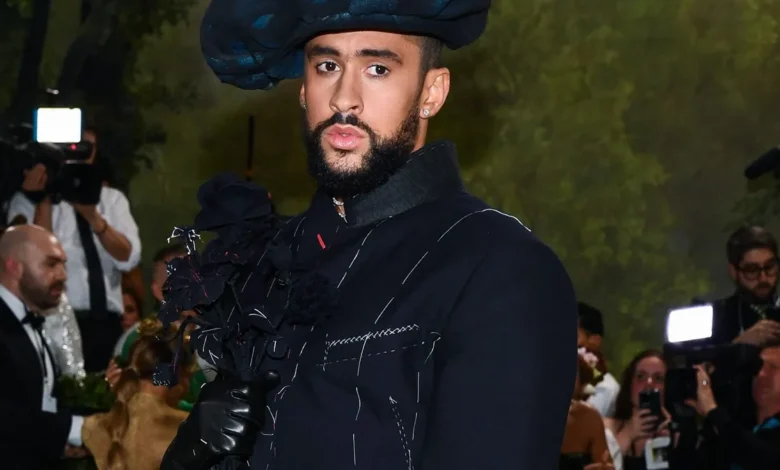
The year 2025 became more than just another milestone in Bad Bunny’s career—it turned into a true battleground for recognition, where musical achievements became intertwined with political conflict. The artist’s new album, released in January, instantly soared up the charts and amazed not only fans but also the harshest critics. Yet behind the scenes of loud accolades and ovations, real drama unfolded: the Puerto Rican’s success became an irritant for some segments of American society, placing his name at the center of debates over migrants’ rights and cultural identity.
His victory at the Grammys, where Bad Bunny became the first ever to win the top prize for a Spanish-language album, was not just a personal triumph but a symbol of change in the music industry. That evening, the artist didn’t hide his emotions, and his speech about the dignity and humanity of Latin Americans sounded like a challenge to entrenched stereotypes. But beyond the stage, his words sparked a storm—and not just among fans.
Super Bowl: stage and protest
A week after his Grammy triumph, Bad Bunny found himself in the spotlight of a different arena—the Super Bowl stage. This time, he wasn’t merely a guest, but the main star of the show, performing side by side with the legendary band Green Day. For the artist, this was not only recognition but also a kind of comeback: previously, he had refused to tour the United States, fearing for the safety of his Latin American fans due to possible immigration raids.
His appearance at America’s premier sporting event became a symbol of support for millions of Spanish-speaking residents in the country. Bad Bunny openly declared, “We are not outsiders, we are just as American,” sparking a new wave of discussion. At the same time, his participation in the Super Bowl became a red flag for political opponents, who saw it as not just entertainment but a political manifesto.
Trump’s response: a new battle
Donald Trump’s reaction came swiftly. The former president, known for his harsh remarks about migrants, publicly criticized both the Grammy ceremony and the Super Bowl lineup. In his statements, he did not mince words, calling the show ‘garbage’ and openly expressing his dislike for Bad Bunny, despite previously claiming he did not know the performer.
In response to the Puerto Rican artist’s popularity, Trump supporters organized an alternative event — The All-American Halftime Show, headlined by Kid Rock, a close friend of the former president. This event was conceived as counterprogramming, intended to divert attention from Bad Bunny’s performance and emphasize ‘traditional American values.’ However, despite all efforts, attempts to sideline the artist from the nation’s main stage were unsuccessful.
Cultural Clash
The situation surrounding Bad Bunny has become a reflection of deeper trends taking place in American society. His success has served as a litmus test for the contradictions between proponents of multiculturalism and those advocating for the preservation of a ‘pure’ national identity. For many Latinos, the artist has come to symbolize hope and pride, while for his critics he is an irritating reminder of changes that can no longer be ignored.
At the same time, Bad Bunny himself does not seek the role of a political leader, but his actions and statements inevitably acquire a political dimension. Each of his moves—from refusing to tour to delivering emotional speeches at award ceremonies—sparks new debates and controversies that go far beyond show business.
Future remains uncertain
It is still unknown who will join Bad Bunny on stage during the Super Bowl, or to what extent his performance might shift public opinion. One thing is clear: the confrontation between the artist and his critics is only intensifying. Whether music can serve as a bridge between cultures or remain a battleground is a question that remains open.
In the coming months, interest in Bad Bunny will not subside. His name has already become a symbol not only of musical achievement, but also of the fight for recognition and respect for diversity. What his next move will be is a mystery millions are watching.
Bad Bunny, whose real name is Benito Antonio Martínez Ocasio, was born in Puerto Rico and in just a few years has become one of the most influential figures in global pop culture. His work fuses reggaeton, Latin, and urban music, while his lyrics often address themes of identity, social justice, and personal freedom. The artist is known not only for his musical experiments but also for his outspoken civic stance, making his performances a topic of discussion far beyond the music industry. His achievements on the international stage and bold statements continue to inspire fans around the world and spark debate among critics.