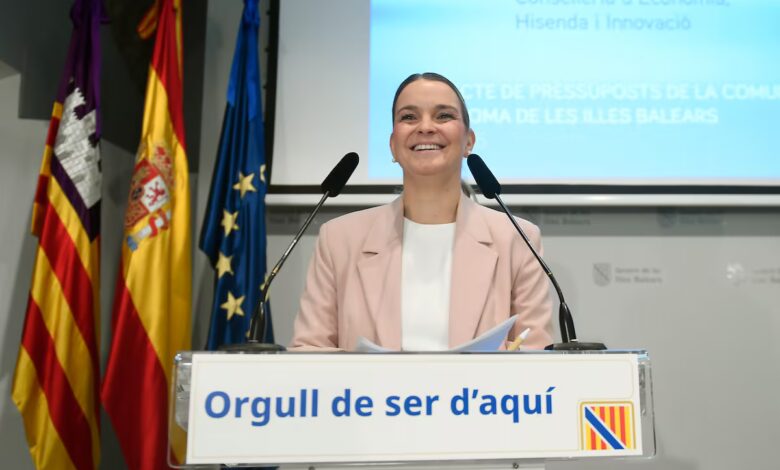
A sharp political conflict has erupted in the Balearic Islands: the regional parliament rejected the proposed spending cap, putting the government of Marga Prohens in a difficult position. Now, the authorities are forced to extend the current budget into next year, after failing to secure support from any parliamentary factions following the breakdown of relations with Vox. The dispute stems from disagreements over language policy and other key issues.
The option of rolling over the budget had been under discussion in the government for several weeks. Negotiations with Vox and the socialists of PSIB-PSOE had all but stalled: both sides put forward conditions that the ruling party found unacceptable. As a result, despite attempts to reach a compromise, neither party yielded, and parliament ultimately rejected the spending cap for 2026 by a majority vote.
Break with Vox
Last year, the budget was only passed after difficult talks with Vox, when the government agreed to a number of far-right demands—from education reforms to changes in tax policy and stricter migration controls. This time, however, things turned out differently: after a series of conflicts over language and other key issues, dialogue between the parties was completely cut off.
Vice President and Finance Minister Antoni Costa has repeatedly emphasized that the government will not make concessions that go against its principles. He stated that the region can operate with an extended budget until the next elections in 2027. After a failed vote, where 30 deputies opposed and only 28 supported the initiative, it became clear: in 2026, the Balearic Islands will operate under the same financial rules as in 2025.
Political accusations
During the parliamentary debate, Costa accused both Vox and the Socialists of acting on directives from Madrid and serving party interests rather than those of the archipelago’s residents. According to him, both party leaders—Pedro Sánchez and Santiago Abascal—would rather leave the region without a new budget than allow the current government to implement its plans.
The vice president also noted that the Socialists had put forward conditions which, in the government’s view, infringed on property rights and affected existing guarantees. As for Vox, Costa said their demands were never clearly articulated, making that the most disappointing outcome of the negotiations.
Opposition stance
Manuela Cañadas, the Vox representative, officially announced the party was breaking ties with the ruling party and said their group would no longer support government initiatives. She stressed that Vox would not vote for the spending cap and would not back a “fictitious budget.”
At the same time, the socialists from PSIB-PSOE, according to their spokesperson Iago Negueruela, were prepared to support the spending cap provided that the environmental tax was increased and a car rental levy was introduced. However, the government did not agree to these demands, and no compromise was reached.
Regional outlook
Back in September, the Balearic Islands authorities had warned Vox that they were only willing to consider minimal concessions to secure budget approval. As a result of the failed vote, the region will now have to operate under extended fiscal rules, while political tensions between the main parties have only intensified.
The government of Marga Prohens is now forced to work with the budget approved back in July last year and can only hope that the situation does not worsen before the next elections. The possibility of renewed negotiations with Vox remains open, but for now, neither side seems willing to engage in dialogue.