The decision to build the connecting tram section along the Diagonal in Barcelona marks a key moment for the city’s residents and all of Catalonia. This project has the potential to reshape the region’s transport map, improve mobility, and reduce road congestion. Approval of the final stage brings the long-awaited integration of the city’s two tram networks closer, a development that will affect millions of passengers.
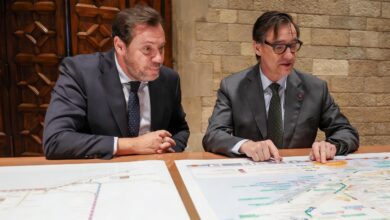
According to El Pais, the board of the Autonomous Transport Authority (ATM)—where the majority of votes belong to the Generalitat, and both Barcelona City Hall and the Metropolitan Area also participate—has approved the project for the civil works section between Verdaguer station and Francesc Macià square. This decision follows the city authorities’ approval in March and is the final step in the bureaucratic process. Progress now depends on a funding agreement between the Generalitat and city hall: the region must contribute 80 million euros, while the city is to allocate 115 million.
Financial and political hurdles
Despite formal approval, the project faces significant obstacles. The main issue is that the Generalitat does not have an approved budget, which prevents construction from starting. In addition, there is still no confirmed start date: according to El Pais, work is unlikely to begin within the current mandate. With the 2027 municipal elections approaching and large-scale construction projects already underway in the city center, further disruptions could lead to public discontent.
The construction is planned to take five years, but the exact start date has not been announced. Authorities express concern that additional works on central streets, where reconstruction is already underway on Balmes, Urgell, Francesc Macià, and the Rambla, could worsen transport issues. Despite this, the project’s completion promises significant improvements to the urban environment and a reduction in car traffic.
Technical details and city impact
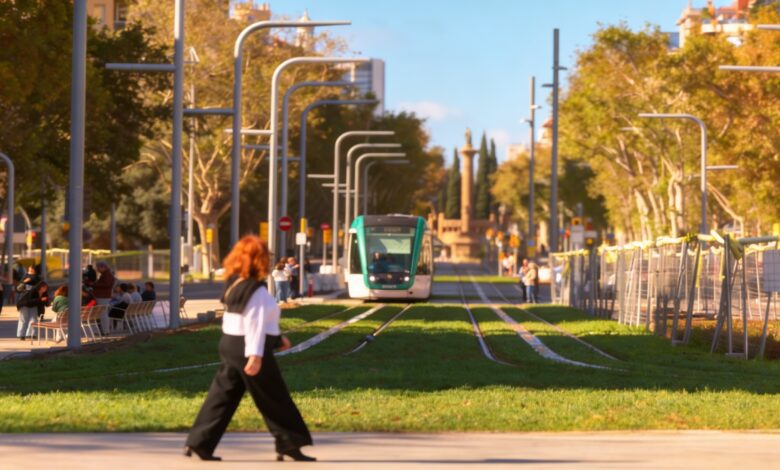
To fully connect the Trambaix (Baix Llobregat) and Trambesòs (Sant Adrià) networks, 2.8 kilometers of tracks remain to be built with three new stations: Diagonal-Cinc D’oros, Balmes, and Casanova, as well as a connecting stop at Francesc Macià square. According to El Pais, the project has not only transport but also political significance: the idea of unification has been discussed for decades, and its implementation will link nine municipalities and enhance the integration of different modes of public transport.
The extension of the Trambesòs line to Verdaguer has already led to a 50% increase in ridership since 2023, reaching 120,000 trips a day. Once the connection is complete, tram usage is expected to double and reduce the number of cars on the central part of Diagonal by about 12,500 per day. This should lower noise and air pollution and make the city more comfortable for pedestrians and cyclists.
Work allocation and budget
Work will proceed in parallel: the city hall is responsible for building the new stormwater collector and upgrading the streets, while the Generalitat handles the railway infrastructure, including tracks, overhead lines, and stations. The civil engineering part of the tramway infrastructure is estimated at 47 million euros. Total costs for the city will reach 115 million: 62 million for the collector and 53 million for the redevelopment of Diagonal, which includes widening sidewalks, reducing lanes for cars, and creating more space for bicycles, buses, and pedestrians. The Generalitat’s investment in the railway section is set at 80 million euros.
Questions of funding and coordination between different levels of government remain unresolved. According to russpain.com, such infrastructure projects often face delays due to political disagreements and budget distribution challenges. It is important to note that similar situations have already occurred in other regions of Spain, where major transport initiatives have been postponed for years due to a lack of consensus between municipalities and regional authorities.
Context and experience from other cities
In recent years, Spain has repeatedly faced challenges in implementing major urban projects. For example, in Catalonia, a large-scale school infrastructure upgrade program was recently launched, also requiring significant investments and cooperation between various authorities. As experience shows from major school renovations in Catalonia, budget coordination and allocation of responsibility between regions and cities often become stumbling blocks.
In other Spanish cities such as Madrid and Valencia, public transport development projects have also faced delays due to political disputes and lack of funding. Nevertheless, the successful implementation of such initiatives leads to noticeable improvements in quality of life, reduced traffic congestion, and increased popularity of public transportation. In Barcelona, the tram connection project along Diagonal could become an example of how complex infrastructure challenges can be addressed through cooperation among all stakeholders.