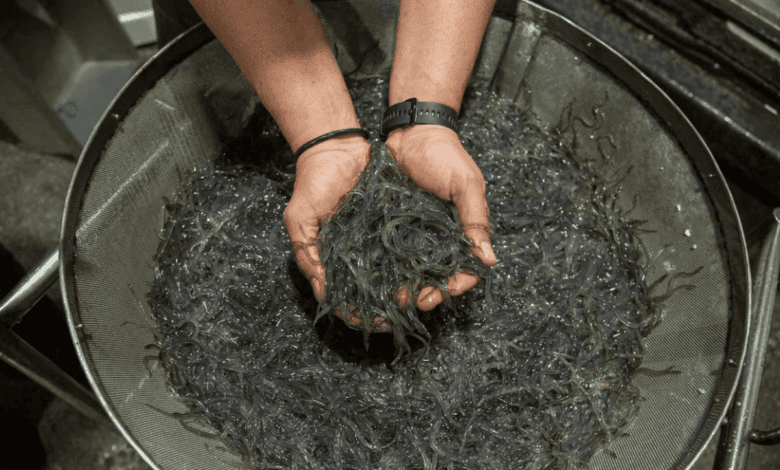
The issue of a ban on elver fishing in the Basque Country has become one of the most contentious topics for fishermen and gourmets. The authorities’ decision to completely halt the fishery has sparked a wave of discontent among professionals, especially since in neighboring regions — Asturias and Cantabria — fishing is allowed, albeit with restrictions. For many locals, this is not just an economic blow but also a challenge to traditions associated with one of Spain’s most expensive delicacies.
The situation is further complicated by the fact that elver prices have soared to record highs in recent years, and the dish itself has all but disappeared from holiday tables. Last season, the price per kilo reached €1,200, and even such sums are not enough to save the fishery from decline. Basque Country fishermen have found themselves at a disadvantage compared to their counterparts in other regions, prompting them to take legal action.
Legal battle
The Basque Eel Fishermen’s Association has filed a lawsuit with the autonomous region’s High Court, demanding at least a temporary return to fishing. In their view, the ban is unfair, as fishing is allowed in Cantabria and Asturias, and in France quotas of up to 65 tons have been allocated. Fishermen believe that such regional disparities do not solve the issue of species conservation, but only create tension and economic losses for local residents.
The Basque authorities cite scientific data: according to experts, the European eel (Anguilla anguilla) population has reached critically low levels. Fishing is completely banned in 2025–2026 in an attempt to restore the species. Last year, Basque fishermen managed to catch only 200 kilograms—less than half of the allowed quota. In comparison, France permits catches dozens of times larger.
Ecological crisis
The decline in eel numbers is a problem not only for Spain but for all of Europe. According to international organizations, only 7% of the 1960–1970s population remains in European rivers. Since 2008, the species has been officially recognized as critically endangered. In response, the European Union demands stricter controls and restoration of natural habitats, but approaches to regulating eel fishing vary by country and region.
In Asturias and Cantabria, fishing is only allowed from November to March, and fishermen can go out to sea no more than 30 days per season. These measures are intended to limit the pressure on the population, but Basque fishermen consider them insufficient and point to the imbalance in fishing levels across different countries. The ban in the Basque Country is the strictest—here, eel fishing has been completely halted, in line with recommendations from the AZTI science center and the regional ombudsman.
Traditions under threat
Angulas have always been a part of Basque culinary culture. Until recently, this dish graced festive tables on San Sebastián Day and other significant celebrations. Now, however, it has become almost inaccessible even to affluent residents. A decline in catch and rising prices have led to angulas disappearing from the menus of most restaurants and family gatherings.
Culinary associations and renowned chefs have supported a campaign against the sale of juvenile eels, urging people to refrain from eating them to help preserve the species. The slogan “Angulas — No, Thanks” has become a symbol of the fight for the survival of the European eel. However, for fishermen, the ban means a loss of income and a break from long-standing traditions.
Economy and politics
Fishermen note that their sector makes up only a small share of the overall fishing industry, but for certain families and small communities, angula fishing is a matter of survival. Last year, revenue from the catch amounted to about €100,000, which is a significant sum for a region with limited alternative sources of income.
Fishermen’s association president Unai Eizagirre is demanding that the authorities not delay in seeking solutions and not shift the entire responsibility to local professionals. He points out that the European Union allows fishing to continue if stronger measures to protect habitats are put in place. In his view, a ban in just one region will not solve the problem at the European level.
In recent years, similar disputes have arisen in other parts of Europe. For example, France and Italy have also discussed restrictions on catching rare fish species, sparking protests among local fishermen. In some cases, courts have ruled in favor of professionals, allowing limited fishing under strict supervision. However, in most cases, priority is given to the preservation of endangered species. In Spain, the issue of eel conservation remains a hot topic of debate among environmentalists, fishermen, and authorities.