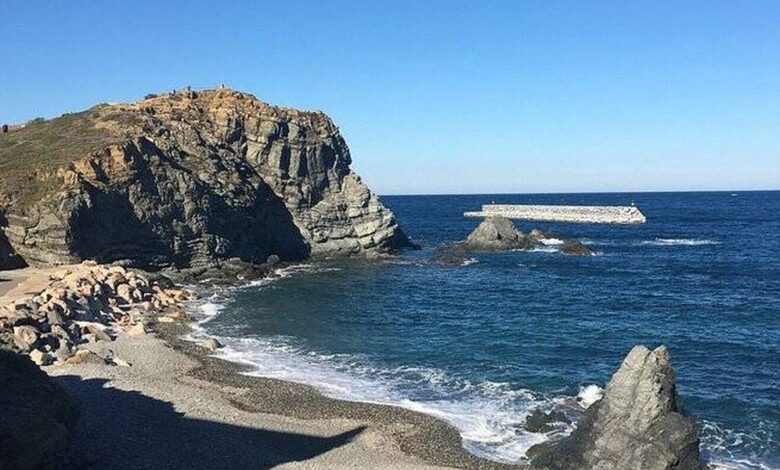
On the rocky coast of Alt Empordà, where the Pyrenees meet the Mediterranean Sea, lies a small patch of land connected to the mainland by a narrow artificial isthmus. This place, known as Castellà, is more than just a picturesque cliff—it is a true historical palimpsest. Beneath its deceptively tranquil surface lie traces of over three millennia of human activity, from prehistoric rituals to 20th-century fortifications. Situated off the coast of the Llançà municipality, this former island has for centuries served as a refuge, trading post, and strategic lookout, silently witnessing the succession of civilizations and empires.
Archaeological excavations along this stretch of the Girona province coastline have begun to shed light on its ancient past. Ceramic fragments, ornaments, and burial traces clearly point to human settlement here as far back as the Late Bronze Age, around the 10th to 7th centuries BC. Researchers believe that back then, the isolated position of the cliff made it an ideal place for rituals or as a stopover on bustling Mediterranean trade routes connecting various cultures. It was a place of power, where ancient seafarers could seek shelter or exchange goods.
Centuries later, during the turbulent years of the Middle Ages, this enclave once again took on strategic importance. To defend against relentless pirate raids and to control the nearby coastal waters, a round watchtower was built here. This imposing structure became a symbol of authority and maritime control. However, its fate turned tragic: in the 18th century, during the War of the Reapers (Guerra dels Segadors), the tower was destroyed, leaving behind only picturesque ruins that still remind us of past grandeur and the violent conflicts of history.
Modern history has also left its harsh mark on the cliffs of Castellà. At the very summit, cleverly concealed within the landscape, two concrete bunkers remain intact to this day. These fortifications were built during the Second Republic as a precaution against possible maritime attacks in the lead-up to global conflict. Today, these silent concrete sentinels serve as a grim reminder of the tense political climate that gripped Europe in the first half of the 20th century and the determination to defend every inch of the coast.
Today, with wars a thing of the past and pirate battles faded into history, CastellAR has become a place of peace and contemplation. Its military and archaeological importance has given way to natural beauty and a historic atmosphere. The rocky silhouette, washed by waves, and the sweeping views of the endless sea attract photographers, artists, and travelers seeking a connection with the wild nature of the Costa Brava. This is one of those rare places where geology, history, and aesthetics merge into a single whole, leaving an unforgettable impression.
For the residents of Llançà, this former island is an integral part of their cultural identity and maritime heritage. Nestled between two iconic protected zones — the Cap de Creus Natural Park and the Albera Area of National Interest — it stands as a symbol of harmonious coexistence between people and nature. Preserving this unique site not only deepens our understanding of the local community’s past, but also safeguards for future generations a landscape where history and nature remain in ongoing dialogue.
Visiting this corner of Empordà is a chance to travel back in time, covering more than three thousand years of Mediterranean history in just a few steps. It’s a journey through the ages, the echoes of which still resonate in the crashing surf and the whisper of the wind among ancient stones. Here, on the border between myth and reality, everyone can feel the breath of eternity and touch the deepest secrets so carefully guarded by the shores of the Costa Brava.