Tensions are rising in Spain over the idea of creating a new political space, initiated by leaders of the Catalan and Basque movements. For many in the country, this news could become a turning point: it’s not only about a possible shift in the political landscape, but also about the future of regional autonomies. Amid growing polarization and waning trust in traditional parties, initiatives like this can spark both hope and concern.
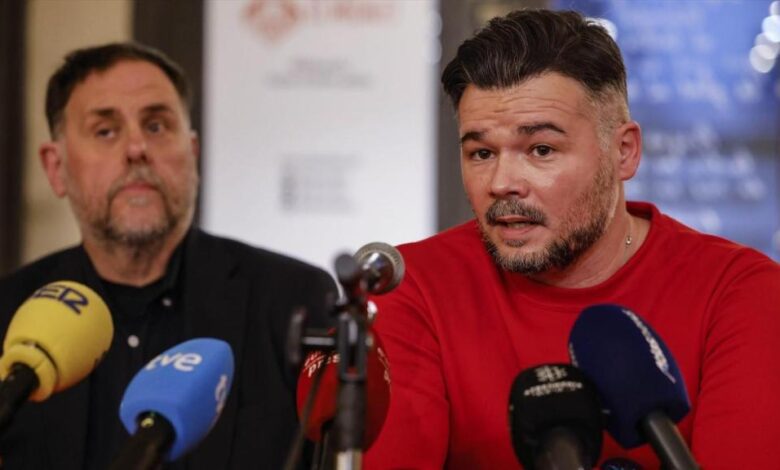
Gabriel Rufián and Oriol Junqueras have proposed forming a coalition that would include parties representing the interests of so-called ‘nations without a state.’ Their vision is for this project to take shape not in the capital, but directly in the regions to reflect the real needs and aspirations of local communities. Rufián has openly invited groups such as Bildu, BNG, and Compromís to join the dialogue, emphasizing that only by working together can they confront the political threats that, in his view, are becoming increasingly real.
Positions and statements
During a recent visit to Valencia, Rufián not only voiced the idea of unification but also expressed his willingness to personally lead the new coalition. His speech at Societat Coral El Micalet resonated widely among local activists and politicians. Rufián noted that the current situation on the left wing of Spanish politics leaves little room to maneuver: ‘There’s nothing left to the left of PSOE,’ he stated, hinting at the need to search for new forms of cooperation.
Oriol Junqueras, in turn, supported his colleague’s initiative, stressing that in the face of a ‘tremendous threat,’ it is essential to seek paths toward unity. He stated he is ready to discuss possible forms of cooperation with all interested parties, not just traditional allies. According to Junqueras, it is important not to miss this moment and to offer society an alternative capable of restoring hope.
Reaction and challenges
There were also sharp remarks directed at opponents. Rufián once again publicly supported Mónica Oltra, the former Vice President of the Valencian government, urging her to return to politics. He noted that Oltra had shown courage and leadership when standing up to members of the Partido Popular (PP), which Rufián referred to as a ‘mafia’ because of their actions during natural disasters. This statement sparked a strong response on social media and among political commentators.
At the same time, despite the bold statements, no concrete steps have yet been taken to form a new coalition. Rufián called on the leadership of all interested parties to begin negotiations so as not to miss the chance to create a truly plurinational project. However, not all political forces are ready to support such an initiative; some regional leaders fear that such an alliance could lead to greater conflict and even attempts to isolate certain territories.
Internal disagreements
There is also no unity within the regional movements themselves. Some members of Compromís and BNG have expressed doubts about the advisability of joining forces with parties whose interests might not align with their own strategic goals. Behind the scenes, there is debate over whether it is truly possible to form a united front, given the deep divisions on key issues between potential participants.
Responding to questions about his willingness to lead the list, Rufián emphasized that his role is to listen to people on the ground, not to dictate solutions from the center. He noted that it is important to him that the interests of residents of L’Hospitalet are protected just as much as those of Jaén. This approach resonates with part of the electorate, but provokes skepticism among those who fear further fragmentation of the political landscape.
Outlook and expectations
It remains unclear whether the initiative by Rufián and Junqueras will actually result in the creation of a new coalition or remain at the level of bold statements. In Spain, debates continue about whether such an alliance could shift the balance of power in the upcoming elections. Some see it as a chance for regional parties to make their mark on the national stage, while others view it as a threat to stability and a driver of centrifugal tendencies.
In the coming weeks, negotiations between potential project participants are expected to intensify. The question of whether Mónica Oltra will return to politics also remains open and could become an additional factor influencing the dynamics of the process. In any case, the situation is developing rapidly, and observers do not rule out the emergence of new unexpected alliances and conflicts.