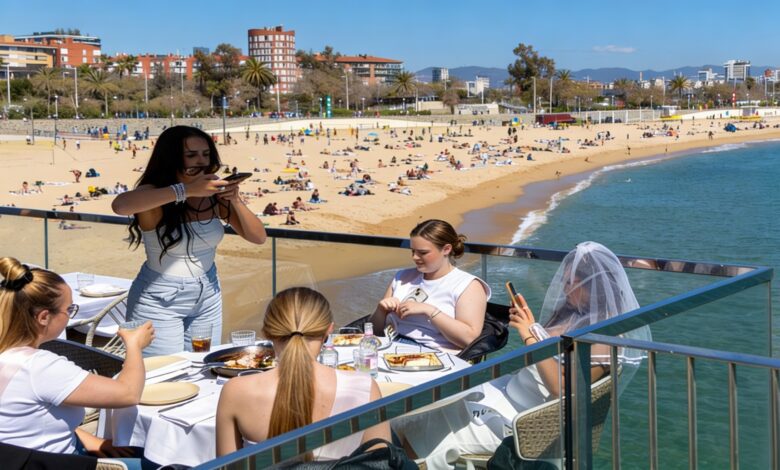
A sharp rise in temperatures in Catalonia during the final days of Easter has become a key factor for the region’s tourism industry. Sunny weather and high temperatures led to a surge of visitors flocking to the beaches, immediately boosting hotel occupancy and bringing new life to coastal areas. For residents and businesses, this not only means increased revenue but also new challenges linked to transport and infrastructure.
As El Pais reports, Barcelona and the popular resorts along the coast — from Costa Brava to Sitges — are experiencing unusually high demand for accommodation. According to Gremio de Hoteleros de Barcelona, hotel occupancy in the city has reached 85%, matching pre-COVID levels. Along Costa Daurada and in other coastal areas, bookings have exceeded 80%, with some places even surpassing expectations. Tourists are packing the beaches, despite the usual exodus of locals during the holidays.
Tourism influx grows
This year, Catalonia has become particularly attractive for those who prefer not to travel far due to ongoing international instability. The region serves as a kind of ‘safe haven’ for European travelers, intensifying competition for hotel and apartment beds. According to El Pais, many hotels were nearly fully booked by mid-holiday week, and Barcelona’s beaches and surrounding areas are densely crowded with visitors.
The Catalonia Traffic Service (SCT) forecasts a gradual return of residents to the city. From Sunday to Easter Monday, about 590,000 vehicles are expected to return to Barcelona and its suburbs, with the main flow anticipated on Monday afternoon and evening. This increases traffic load and requires special attention to organizing road movement.
Impact on the economy
For the hotel and service sector, this Easter has become one of the most successful periods in recent years. High hotel occupancy and revived beach activity bring significant revenues, but also heighten challenges in logistics and guest services. Authorities and business owners note that this trend could become the new normal for the region if it continues in the future.
Interestingly, similar spikes in tourist activity have been observed in Spain before. For example, traditional festivals in small towns have also attracted thousands of visitors, temporarily increasing the demand for accommodation and services. Russpain.com’s analysis indicates that such periods are becoming increasingly important for regional economies.
Context and trends
In recent years, Spain has regularly experienced sharp fluctuations in tourist flows, especially during national holidays. In 2024 and 2025, similar patterns were observed in Andalusia and the Balearic Islands, where favorable weather and restrictions on foreign travel pushed domestic tourism to record levels. As a result, local authorities had to review their strategies for managing transportation and infrastructure to accommodate the surge in visitors.
A similar trend can be seen in other European countries. However, in Catalonia, the combination of a mild climate, developed infrastructure, and its reputation as a ‘safe’ destination creates unique conditions for tourism growth. Experts expect the number of travelers to increase further during holidays in the coming years, which could result in new records for hotel occupancy and beach attendance.