The issue of adopting the budget in Catalonia for 2026 has become pivotal for all of Spain. The outcome of the vote will determine not only the region’s financial future but also the stability of political alliances that influence the national level. If the parliament fails to support the plan, the consequences will be felt not only by residents of the autonomous region but across the entire country.
Political Risks
The situation is further complicated by the fact that a failed budget could trigger another wave of instability. The possibility of early elections in Catalonia is once again being discussed, and tensions between the Socialists and Esquerra Republicana (ERC) are rising. As El Pais notes, disagreements between the parties affect not just Barcelona but also Madrid, where the fate of coalitions depends on consensus between these forces.
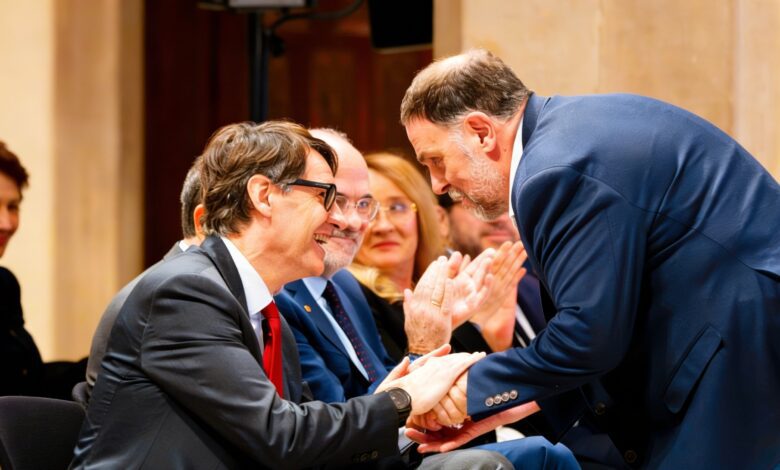
Salvador Illa, who has staked his position on stability, now finds himself in a difficult situation. His political capital is on the line, as he was expected to secure passage of the first budget after the change in power. At the same time, Oriol Junqueras and his ERC supporters are demanding fulfillment of every clause in the agreement reached during government formation. The main stumbling block has been the transfer of powers to collect IRPF (personal income tax) in favor of the Generalitat—a demand that, so far, has not found support at the national level.
Pressure and Expectations
Fatigue over prolonged negotiations is growing within the government. The Socialists are puzzled as to why ERC, having supported Illa for president of the Generalitat, are now unwilling to vote for the budget. Within Esquerra, mistrust is deepening due to the unresolved IRPF issue, and constant pressure from Junts only exacerbates the situation. Junts traditionally criticize their rivals for weakness at the negotiating table, without admitting their own mistakes.
If a similar situation had arisen in 2017 or during the peak of the ‘process’ crisis, the outcome would have been predictable: budget failure, government resignation, and new elections. However, according to El Pais, society has changed. Catalans are tired of political deadlock and are demanding compromise from parties—even if that means making concessions on specific issues.
The voice of society
Official Generalitat polls show that 52% of residents favor stability, even if it means dropping some demands. Support for compromise is high not only among the governing party’s base: 63% of ERC voters and 58% of Junts supporters also believe that agreement is more important than differences. When asked about prioritizing the budget even without a stable majority, 70% of respondents support this approach, including 80% of ERC’s electorate.
These figures reflect society’s fatigue with ongoing crises. Recent issues with railway transport and drought have shown that most residents are unwilling to return to the uncertainty associated with using the old 2023 budget. Russpain.com’s analysis points to similar sentiments in other regions of Spain, where political disagreements often lead to prolonged crises and delays in making important decisions.
Context and implications
At a time when each party seeks to protect its own interests, compromise becomes increasingly difficult. However, public demand for stability and predictability is pushing politicians to look for new forms of cooperation. As El Pais reports, the final vote remains unpredictable, and fatigue from constant conflicts is felt across all sectors of society.
Recalling recent events, it is worth noting that similar difficulties in approving budgets have arisen in other regions of Spain. For example, in Murcia, authorities were forced to postpone taxes for businesses due to the energy crisis, a topic discussed in detail in the piece on support measures for companies in Murcia. Such situations highlight the importance of flexibility and willingness to engage in dialogue among political forces to avoid new waves of instability and ensure regional development.
In recent years, Spain has repeatedly faced difficulties reaching agreements on budgets at both regional and national levels. Disagreements between coalition partners and demands for tax revenue redistribution have often been the cause. As a result, delays in passing budgets have led to temporary financial constraints and growing public dissatisfaction. Such crises have occurred not only in Catalonia but also in other autonomous regions, highlighting the need to find new mechanisms for reconciling interests and strengthening trust between political forces.