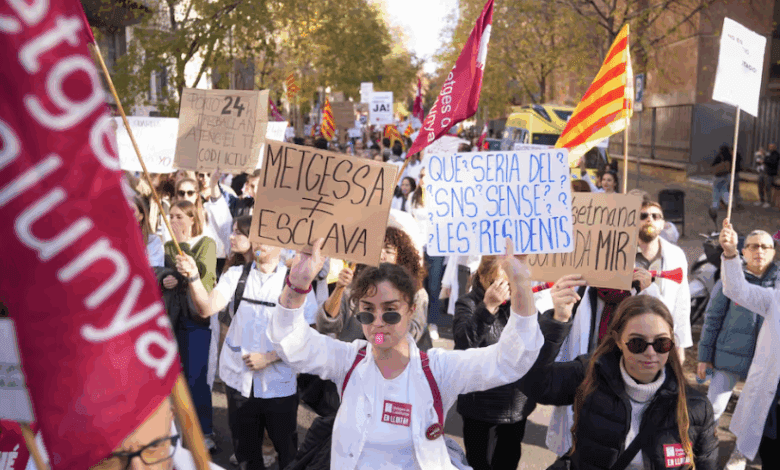
On Wednesday, the streets of Barcelona were once again filled with white coats as hundreds of doctors from both public and private clinics in Catalonia staged a protest. Their main goal is to have their professional specifics recognized and to secure a separate labor agreement that takes into account the unique aspects of their work. According to city police, a column of around 800 people began marching from the Faculty of Medicine at the University of Barcelona and ended the demonstration outside the Department of Health building.
The protesters’ slogans were directed not only at officials but also at the general public. “This fight is not just for us, but for our patients as well,” emphasized Xavier Lleonart, Secretary General of the Metges de Catalunya union. According to him, doctors are being forced to work at their limits, which negatively impacts the quality of medical care.
Reasons for discontent
The main reason for the strike was a new draft of the Single Statute for healthcare workers, which doctors say does not address their real needs. Protesters are demanding that the Catalan authorities recognize their right to a separate agreement reflecting the specifics of the local healthcare system. Particular outrage was sparked by remarks from Health Minister Olga Pané, whom participants accused of ignoring the sector’s problems.
Doctors insist that current working conditions are leading to burnout and a mass exodus of young professionals from public clinics. “If nothing changes, young people will simply leave the system,” warned Llonaert. He also pointed out that doctors resolve more than 70% of the population’s medical issues, and that replacing them with artificial intelligence is not possible.
Scale of the strike
On this day, medical professionals across Spain joined the protest. In Catalonia, the strike was supported by the largest regional union, Metges de Catalunya, and at the national level by the Confederation of Medical Unions of Spain (CESM). Doctors are demanding not only a revision of the statute, but also the creation of a separate negotiation platform for discussing working conditions and the organization of medical care.
According to official data from the Department of Health, 7.2% of doctors in the SISCAT system took part in the strike. However, unions report different figures: in Barcelona, 58% of doctors participated, in Girona — 40%, in Tarragona — 42%, and in Lleida — 20%. Overall, according to the union, 55% of professionals supported the strike, which is 10% more than on the previous day.
Healthcare situation
The protests come amid a sharp rise in flu cases: Catalonia has recorded a record high of 418 cases per 100,000 residents. This has further increased the workload for doctors, who are already working under conditions of staff shortages and overload. The issue is especially acute in primary care, where 57% of employees backed the strike, compared to 29% in hospitals.
Unions accuse the Department of Health of refusing to engage in dialogue and address issues related to working hours and on-call shifts. “The authorities cannot ignore our demands forever,” said Llonart. He emphasized that doctors have enough resources to make their voices heard.
Demands and Prospects
Healthcare workers insist on the urgent need for change. They demand not only better working conditions but also guarantees of patient safety. In their view, only a separate agreement can take into account all the nuances of doctors’ work in Catalonia and prevent further staff shortages in the healthcare system.
Doctors are sure that if the situation does not improve, the quality of medical care in the region will only get worse. They are prepared to continue their protests until the authorities begin a constructive dialogue and take real steps to improve working conditions.
It is worth noting that Metges de Catalunya is the largest doctors’ union in the region, which has been defending the interests of medical workers for many years. The organization takes an active part in negotiations with the authorities and regularly organizes protest actions. Its representatives emphasize that the main goal is not only to protect doctors’ rights but also to ensure high-quality medical care for all residents of Catalonia.