Residents of Catalonia once again faced uncertainty today as Rodalies train services began the day with disruptions caused by several factors. Strong wind gusts and ongoing repair work on key railway sections forced operators to impose restrictions, directly affecting thousands of passengers. For many, this means extra transfers, delays, and having to search for alternative routes.
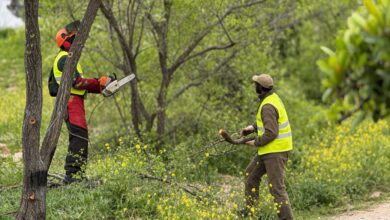
Civil protection services have warned of potential schedule changes due to adverse weather conditions. Catalan authorities, including the Minister for Territorial Development Sílvia Paneque, stated their readiness to respond quickly to the situation. Special crews are already on duty in the most vulnerable areas, prepared to deal with fallen trees and other wind-related incidents.
Route restrictions
Currently, four sections of the railway network remain closed due to large-scale works carried out by Adif. On these stretches, Renfe has organized bus services to help compensate for passenger inconvenience. For example, regional trains to Tarragona do not run on the R15 line between Reus and Riba-roja d’Ebre, and on the R4 line, traffic is still suspended between Sant Sadurní and Martorell — here, too, buses are in operation.
The R7 line is currently served by buses between Cerdanyola and the university campus, while the regional RL4 route between Cervera and Manresa is completely closed to trains. Additionally, there is no rail service on the R3 and R8 lines, forcing passengers to switch to ground transportation.
Impact of Weather Conditions
The situation is further complicated by weather forecasts predicting stronger winds, which could lead to additional train cancellations. Authorities have not ruled out the need for urgent schedule and route adjustments if weather conditions worsen. On some sections, emergency crews are already on standby, ready to respond quickly in case of fallen trees or other obstacles on the tracks.
The regional development advisor highlighted that decisions regarding service suspensions will be made jointly with Renfe and Adif based on updated weather forecasts. This means passengers should be prepared for sudden schedule changes and potential delays.
Train Drivers’ Strike
On top of existing issues, a train drivers’ strike organized by several unions, including CGT, Sindicato Ferroviario, and Alferro, has added to the disruption. This has led to further disturbances in Rodalies operations, as some staff have refused to report for shifts. As a result, even in areas where service is not restricted by repairs or weather, trains may run irregularly.
Passengers are forced to look for alternative ways to get to work or home, while transport companies are trying to minimize the impact by providing buses and adjusting schedules. However, it has not been possible to fully compensate for the inconvenience so far.
Routes and transfers
On the R1 line, trains operate between L’Hospitalet and Blanes, after which passengers need to transfer to a special train to Maçanet-Massanes, and then board another train to Portbou. On the R4 line, service runs between Sant Vicenç de Calders and Sant Sadurní d’Anoia; from there, passengers transfer to a bus to Martorell Central, then take a train to Terrassa Nord, followed by another train change to Manresa.
The R2 line is currently operating without restrictions, but train service is completely suspended on R3 and R8, and passengers are being offered buses instead. On R8, despite the reopening of the tunnel in Rubí, passenger traffic has not resumed — only freight trains are running on this route.
Impact on passengers
Major disruptions on the Rodalies network have repeatedly sparked discontent among residents of Catalonia. Not long ago, after a collapse on the R4 line near Sant Feliu, the region once again faced a transport crisis — you can learn more in our report about the unexpected collapse and its consequences for rail transport. The situation with regular cancellations and bus transfers is frustrating for passengers, who face daily difficulties in planning their trips.
In a context where weather disasters and infrastructure works coincide with strikes, the region’s transport system is under significant strain. Authorities promise to keep the situation under control, but passengers must show patience and flexibility to reach their destinations.
In recent years, Catalonia’s rail network has repeatedly faced serious disruptions. For example, there were mass train cancellations following the Gelida accident, or the long-term works on the R4 line that led to bus transfers and chaos at stations. Such situations are becoming increasingly common, especially during bad weather or major repairs. For many locals, this has already become a routine part of daily life, though every new incident sparks a wave of criticism and debate directed at transport companies and officials.