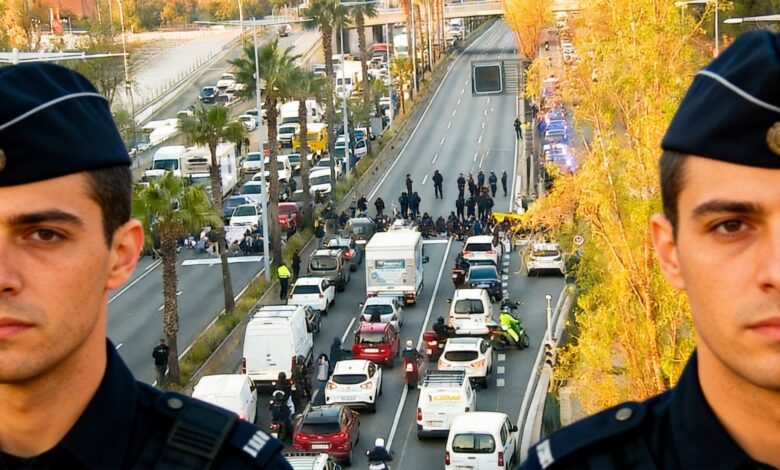
Tensions over the education system have flared up again in Catalonia: mass protests by teachers have led to blockades on main roads into Barcelona. This event marks the climax of a week of strikes affecting both public and private schools in the region. For Barcelona’s residents and businesses, the impact is tangible: traffic on key highways has been paralyzed, and the educational process disrupted.
According to El Pais, from early morning groups of teachers and supporting staff occupied several sections of the Ronda de Dalt ring road and blocked the A-2 highway near Abrera. These actions are part of a series of initiatives aimed at highlighting problems in the education sector. On this day, not only public school teachers, but also representatives of private institutions and students joined the protests.
Reasons for escalation
The main demands of educators include increasing staff, especially specialists to work with children with special needs, as well as reducing workloads and bureaucracy. Teachers believe the current system cannot cope with the growing complexity of classrooms, which increasingly include children with various disorders and limitations. This affects the quality of education and creates additional challenges for everyone involved.
Key points include salary increases, notably the doubling of the regional bonus, which has remained unchanged for a quarter of a century. Another issue under discussion is compensation for night shifts during school trips, along with a gradual reduction in class sizes, especially in schools facing greater challenges. Although the Catalan authorities have proposed to invest 2 billion euros over four years and increase the bonus by 30%, most unions believe these measures are insufficient.
Authorities’ response and consequences
The Catalan government had hoped that an agreement with the CC OO and UGT unions would help prevent a new wave of protests. However, as El Pais noted, this move had the opposite effect: most teachers saw it as an attempt to sweep the issue under the rug rather than resolve it. As a result, the strike gained even more momentum and saw growing support among both teachers and parents.
Throughout the week, local actions took place across various regions of Catalonia, but the final day saw the largest turnout. The climax came with a major demonstration in central Barcelona: four columns of protesters converged at Plaça de Tetuan before marching to the parliament building. According to El Pais, the scale and organization of these actions point to deep dissatisfaction within the education sector.
Impact on schools and students
The strike affected not only teachers, but also thousands of students whose classes were canceled or rescheduled. Parents had to find alternative childcare arrangements. Some schools held classes in a shortened format, while others closed entirely during the protests. Regional authorities called for dialogue, but most teachers insist on continuing their struggle until their main demands are met.
The situation in Catalonia reflects broader trends in Spanish education: staff shortages, overcrowded classrooms, and insufficient funding are fueling repeated unrest. In recent years, similar protests have occurred in other regions, but only in Catalonia have they reached such a large scale.
In recent years, Spain has repeatedly faced mass strikes in the education sector. In February 2024, similar protests broke out in Madrid and Valencia, where teachers also demanded increased funding and reduced workloads. In 2025, educators in Andalusia organized a series of actions against staff cuts and growing bureaucracy. These events show that education issues remain among the most pressing for Spanish society, and finding solutions requires not just financial investment, but also systemic changes.