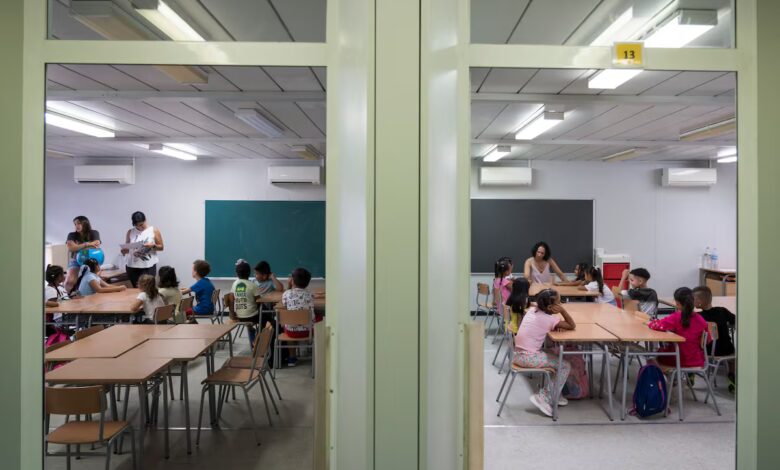
The abrupt decision by Catalonia’s authorities to cancel the launch of new professional development programs for math and language teachers came as a surprise to many. At a time when students’ performance in these subjects remains a cause for concern, abandoning these long-awaited changes could impact the future of education in the region. For parents, educators, and students alike, this is more than just a bureaucratic announcement—it’s about the quality of learning and the prospects for an entire generation.
Initiative fails
Initially, the plan was for three specialized courses to help teachers update their teaching methods and make lessons more effective. The programs were designed for elementary and middle school educators, with free participation. Authorities allocated a significant budget to cover all expenses and expected 180 active teachers to complete the training.
However, despite the initiative being approved as early as summer, by January it was announced that it had been completely canceled. The official explanation cited organizational difficulties and delays in signing the necessary agreements between departments. As a result, the Department of Education admitted that it was impossible to implement the project within the planned timeframe.
New approaches
Instead of the canceled programs, officials have proposed an alternative—shorter, more flexible courses that will be held in a blended format: some sessions in person, others online. The plan is to cover a larger number of teachers—up to 900 people—though the implementation budget has been cut by nearly half.
The new courses are being developed by the Institute of Education Sciences at leading universities in the region. Authorities emphasize that the modular training system better matches teachers’ real capabilities and does not require long absences from their main work. However, experts note that the academic value of the new courses is lower than that of the canceled programs, and they won’t offer the same depth of immersion in teaching methodology.
University reaction
The authorities’ decision has caused disappointment in academic circles. Heads of relevant university departments point out that the creation of new programs took over a year and all approval stages had already been completed. According to them, the project was canceled not only due to bureaucratic hurdles, but also because of changes in leadership in key agencies, which led to a shift in priorities.
Deans and instructors stress that this was a missed opportunity to introduce modern, research-based teaching approaches in schools. They believe such programs could have formed the foundation for a professional educators’ community able to share experience and drive innovation in practice.
Unanswered questions
The teaching community in Catalonia has yet to receive clear explanations for the cancellation of the program. Many teachers who were counting on free professional development now have to look for other ways to advance their qualifications. On social media and specialized forums, debates continue over how effective the new system of modular courses will be and whether it can truly impact teaching quality.
While some experts believe the flexible learning format will reach more educators, others fear that without in-depth methodology and ongoing university support, real changes in schools might not occur. The question of how exactly the new system will be implemented—and who will assume responsibility for its results—remains unresolved.